The Adams Time Chart 3.0 by Generic suits buyers who want a long visual timeline for Bible study or homeschool. The Adams Time Chart 3.0 by KJZXF fits those who need a slightly longer foldout with 21 panels for church or classroom display. The snootion H&P Notebook is for medical students and professionals who need a compact history and physical exam organizer. The ProMed Products H&P Notebook works for healthcare students who want structured templates and reference sheets. The Ovesmusl PU Leather 3 Ring Binder is for anyone making a family history keepsake. The main tradeoff is between a ready made historical timeline and a blank notebook or binder you fill yourself.

Generic Adams Map of History Time Chart
Best for: Homeschool families wanting a visual Bible and world history timeline
- Unfolds to 99.6 inches, showing a synchronological world history from creation to modern times.
- Printed on durable 12pt cardstock with a handwritten special edition design.
- Hardcover accordion format measures 10.24 x 20.47 inches when closed for easy storage.
Keep in mind: Accordion format requires wall or table space when fully unfolded.
Check price on Amazon ↗
KJZXF Adams Time Chart 3.0
Best for: Church or classroom settings needing a 23 foot biblical timeline
- Covers 6,000 years of history from 4004 BC to the early 20th century.
- 21 full size panels unfold to 23 feet, or can be viewed section by section as a book.
- Includes full color illustrations, handwritten commentary, and durable 12pt deluxe matte cardstock.
Keep in mind: Full 23 foot display needs a long wall or open floor area.
Check price on Amazon ↗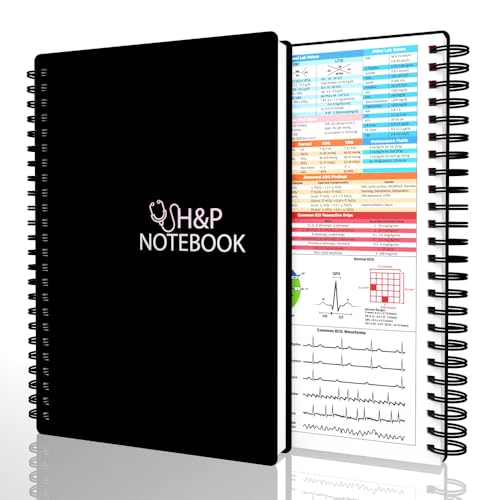
Snootion H&P Notebook
Best for: Medical students who need a pocket history and physical exam notebook
- A5 size fits in a white coat pocket and has a durable plastic cover.
- 100gsm thick paper prevents bleed through for clean notes.
- Includes sections for patient info, history, exams, labs, and clinical reference values.
Keep in mind: Spiral binding may catch on fabric; not a hardcover design.
Check price on Amazon ↗
ProMed Products H&P Medical Notebook
Best for: Nursing and PA students needing structured SOAP note templates
- Preformatted templates for SOAP notes, history taking, and physical exams.
- Compact size fits a white coat or scrub pocket.
- Includes 10 pages of reference sheets with core clinical values.
Keep in mind: Binding may be stiff at first and needs use to lay flat.
Check price on Amazon ↗
Ovesmusl PU Leather 3 Ring Binder
Best for: Creating a family history album or genealogy keepsake
- Holds 200 sheets with 1 inch round rings and two 4 inch side pockets.
- Faux leather vintage style hard cover with elastic band and metal corner protectors.
- Fits most 8.5 x 11 inch paper and lays flat for writing.
Keep in mind: Rings and cover add bulk; not a pocket sized option.
Check price on Amazon ↗Product names and images come from the Amazon listings and are rechecked against them (last checked Nov 8, 2026). The highlights restate each listing's own bullet points as published on Nov 8, 2026. Prices change often, so we do not show them. These are affiliate links: as an Amazon Associate we earn from qualifying purchases, at no extra cost to you.
What to Check Before Buying
Before you commit to a history book, confirm the format matches how you plan to use it. Some listings describe a foldout timeline that doubles as a wall chart, while others are pocket notebooks or ring binders meant for your own writing. The listing will state the closed size, the unfolded length, and the binding type.
Also check the intended audience. One chart is explicitly designed for Bible study and Christian education, while another is made for medical students who need a structured history and physical exam record. A family history project needs a blank binder, not a preprinted timeline.
Finally, look at the paper and cover materials. Listings mention cardstock weight, paper thickness, and cover type. These details affect durability, whether the book can lay flat, and how well it survives daily use.
- Format: foldout chart, notebook, or binder
- Intended use: study aid, clinical notes, or keepsake
- Paper weight and cover durability
- Closed size and unfolded display length
Who Should Skip These Picks
If you want a narrative history book with chapters to read, none of these listings are that. The Adams charts are visual timelines with illustrations and brief notes, not a prose history. The medical notebooks are blank templates for your own patient notes.
If you need a portable pocket timeline for travel, the foldout charts are large even when closed. The 10.24 x 20.47 inch hardcover of the Generic chart and the 23 foot unfolded KJZXF chart are meant for a home or classroom wall, not a bag.
If you are looking for a filled in family history book, the Ovesmusl binder comes empty. You supply the pages, photos, and documents. It is a storage and organization tool, not a prewritten genealogy.
How the Shortlist Was Put Together
The picks were chosen by reading each listing's stated features only. I looked for a spread of designs: two visual timelines, two medical history notebooks, and one family history binder. That gives a range of sizes, formats, and intended uses.
No unit was handled by us. No in person testing, no reading of the books, no checking of paper quality in person. Every fact in the product cards comes directly from the listing text.
The goal was to include options that fit different buyers: a homeschool parent, a church educator, a medical student, a nursing student, and a family archivist. Each product fills a distinct niche.
Comparing the Picks on Stated Features
The table below compares the attributes each listing actually states. Where a listing does not mention a feature, I write "Not listed" instead of guessing. This helps you see which product matches your priorities without assuming details.
The two timeline charts differ mainly in unfolded length and panel count. The medical notebooks differ in binding and reference content. The binder is the only one that holds your own pages.
Use the table as a quick filter. If you need a wall chart, skip the notebooks and binder. If you need a pocket tool, skip the timelines and the binder.
| Product | Unfolded Length | Paper | Binding | Intended Use |
|---|---|---|---|---|
| Generic Adams Time Chart | 99.6 inches | 12pt cardstock | Hardcover accordion | Bible study, homeschool |
| KJZXF Adams Time Chart | 23 feet | 12pt deluxe matte cardstock | Hardcover foldout | Church, classroom, display |
| Snootion H&P Notebook | Not listed | 100gsm | Spiral | Medical history and physical exam |
| ProMed H&P Notebook | Not listed | High quality paper (weight not listed) | Durable binding | SOAP notes, clinical rotations |
| Ovesmusl 3 Ring Binder | Not applicable | Not listed | 3 ring, 1 inch round rings | Family history, photos, keepsake |
Which Format Fits Your Space
Space is a big factor. The Generic chart needs a wall or table at least 99.6 inches long when open. The KJZXF chart needs 23 feet. Both fold back into hardcovers for storage, but you need a place to spread them out for study.
The medical notebooks are designed to fit in a white coat or scrub pocket. The snootion is A5 size, and the ProMed is described as compact enough for a pocket or bag. They are made for on the go use in clinical settings.
The Ovesmusl binder is letter size, about 10 x 12.6 inches. It sits on a desk or shelf, not in a pocket. It is best for a home office or craft table where you assemble a family history.
Durability and Everyday Use
Paper weight matters for how well the pages hold up. The Generic and KJZXF charts use 12pt cardstock, which is thick and sturdy. The snootion notebook uses 100gsm paper to prevent bleed through from pens. The ProMed notebook says high quality paper but does not give a weight.
Bindings vary. The Generic and KJZXF charts are hardcover accordion style, which protects the pages when closed. The snootion has a spiral binding that opens flat to 180 degrees. The ProMed binding may be stiff at first and needs breaking in.
The Ovesmusl binder has a faux leather hard cover, an elastic band, and metal corner protectors. It is built to hold up to 200 sheets and keep them secure. The listing does not state the paper weight because the paper is sold separately.
Questions Buyers Ask Before Choosing
What is the difference between the two Adams time charts?
The Generic chart unfolds to 99.6 inches and is described as a handwritten special edition for Bible study and homeschool. The KJZXF chart unfolds to 23 feet with 21 panels and is described for church, classroom, and display. Both cover biblical and world history, but the KJZXF is longer and has more panels.
Can I use a medical history notebook for my own family history?
The snootion and ProMed notebooks are preformatted for clinical patient encounters, with sections for labs, assessments, and SOAP notes. They are not designed for family genealogy or personal history writing. A blank binder like the Ovesmusl is a better fit for that.
Do any of these history books come with pages already filled in?
The two Adams charts are preprinted with historical timelines and illustrations. The medical notebooks have printed templates and reference sheets, but the note pages are blank for you to write on. The Ovesmusl binder is completely empty, so you add your own pages.
Which History Book Fits Your Need
A homeschool parent who wants a visual aid for Bible and world history should pick the Generic Adams Map of History Time Chart. It unfolds to 99.6 inches on sturdy cardstock and is described as a Christian education tool. A nursing or PA student who needs a structured way to record patient histories should pick the ProMed Products H&P Medical Notebook. It includes SOAP note templates and reference sheets in a pocket size. For a family history keepsake, the Ovesmusl PU Leather 3 Ring Binder holds 200 sheets and has a vintage cover that suits photos and documents.
Scope and limits. The picks were chosen by comparing each listing's stated features, looking for a spread of designs from wall timelines to pocket notebooks to a binder. The limit is that only listing text was used; no units were handled, and paper feel, binding ease, and print clarity were not used.