Two factors decide most high visibility vest purchases: how much retroreflective tape you need for your lighting conditions, and how breathable the fabric must be during a full shift. Buyers in dark or mixed light environments should prioritize wide tape coverage. Those working indoors under bright lights can trade some reflectivity for mesh ventilation. The main tradeoff is between durability and airflow.
Retroreflective Tape Does the Real Work at Night
Fluorescent fabric glows under daylight and some artificial light, but it does almost nothing in headlights. Retroreflective tape bounces light back toward the source, which is what makes you visible to a driver at night. Check that the tape wraps around your sides, not just across your chest and back. A driver approaching from a side street needs to see the reflective band before you step into view.
Look for tape that meets a recognized standard, typically shown as a class level or a square footage of reflective material. Tape placed low on the torso can be blocked by equipment belts or vehicle doors. Tape placed too high can be hidden by a collar or a hood. The listing should tell you the tape width and where it sits on the garment.
Fabric Choice Sets Your Temperature for the Shift
Solid polyester vests resist snags from pallets, tools, and door frames, but they hold heat. Full mesh vests let air move through the front and back, which makes a real difference in a nonair conditioned warehouse or on summer road work. A common compromise is a solid front with a mesh back, which protects your chest from abrasion while letting heat escape behind you.
If you work outdoors in cold weather, a solid vest adds a little insulation and blocks wind better than mesh. If you work indoors near conveyors or shelving, mesh is usually the better choice. Compare the fabric weight and the size of the mesh openings before you buy.
Closures and Fit Change How the Vest Wears
Hook and loop closures are fast to put on and adjust over a jacket, but they collect lint and can lose grip after repeated washing. Zippers stay closed more reliably but are harder to use with gloves. Snap closures sit in between. Some vests have no closure at all and slip over the head, which is fine for quick visits but annoying for all day wear.
Fit matters because a vest that rides up exposes your lower back. Look for a size range that matches your chest measurement over your normal work layers. A vest that is too loose can catch on machinery; too tight restricts movement and traps heat.
Pockets Are Useful Until They Are Not
A chest pocket holds a phone, a radio, or a notepad. A clear ID pocket on the front is common for factory and hospital settings. But every pocket adds fabric and seams, which reduces breathability and can snag. If you already wear a tool belt or a work shirt with pockets, a vest without pockets may be cooler and simpler to wash.
Check the pocket placement before you buy. A pocket that sits under a seatbelt or a harness strap is useless. A pocket with a flap keeps out dust and rain; an open pocket is easier to reach but collects debris in a workshop.
How to Read a Listing Without the Marketing
The listing should state the class or standard the vest meets, the tape width, and the fabric material. If it only says 'high visibility' without a standard, check the photos for tape placement and compare it to a vest you already trust. Ask the seller for the square footage of reflective tape if the listing does not show it.
Some vests are sold by color, but color alone does not make a vest high visibility. A bright yellow vest without retroreflective tape is not the same as a certified vest. Orange and yellow green are the two common fluorescent colors; choose the one that contrasts most with your work environment.
Washing and Long Term Costs
Dirt and grime reduce both fluorescence and reflectivity. A vest worn daily in a dusty warehouse may need washing every week. Check the care label: most vests can be machine washed, but some flame resistant or specialty vests require hand washing or air drying. Heat from a dryer can break down retroreflective tape over time.
A cheap vest that fades in three months costs more per shift than a mid range vest that lasts a year. Look for stitched tape rather than heat pressed tape if you wash the vest often. Stitched tape can still peel at the edges, but it generally holds up longer than adhesive only tape.
Who Should Skip a Vest and Use a Different Garment
If you work in a cold climate and need insulation, a high visibility jacket or parka does the same job with warmth built in. If you work in a role that requires flame resistance, a standard polyester vest is not safe; you need a garment rated for arc flash or flash fire. If you work on water, a life jacket with reflective tape is the correct choice, not a vest worn over a life jacket.
For short visits to a job site, a vest is fine. For full shifts, consider a high visibility shirt or jacket instead, because a vest leaves your arms without reflective material. Drivers see your arms moving, and reflective tape on sleeves helps signal your position.
Fit for the Work You Actually Do
Factory workers near moving equipment need tape that wraps fully around the torso, because a forklift can approach from any angle. Warehouse staff who load trucks outdoors need a vest that stays put when they bend and lift. Metal workshops with sparks and hot surfaces should avoid mesh vests that can melt or catch debris. Laboratory settings often need a clean, simple vest without pockets that collect contaminants. Construction sites vary by season, so a vest with a zip front that fits over a winter jacket is more flexible than a pullover.
Compare the vest to the standard your employer requires. Some sites specify a minimum class level or a specific color. If you buy your own vest, it should meet or exceed that requirement, not just look similar.
| Closure | Best for | Breathability | Durability |
|---|---|---|---|
| Hook and loop | Quick on and off over layers | Good | Fair |
| Zipper | Long shifts where it stays closed | Fair | Good |
| Snap | Occasional use or light duty | Fair | Fair |
| Pullover | Short visits or clean environments | Good | Good |
A pullover vest has no closure to fail, but it can be awkward to remove over a hard hat. A zipper vest is the most common choice for road crews who wear the vest all day.
High Visibility Vest Questions That Come Up on the Job
Is high visibility vest class 2 enough for road work?
Class 2 is generally enough for workers on roadways with speeds below 50 mph and for warehouse or factory use. For highway work with faster traffic or for workers who need to be seen from a long distance, class 3 is the safer choice. Check your employer's requirements, because many sites specify a minimum class.
What is the difference between fluorescent and retroreflective?
Fluorescent fabric absorbs ultraviolet light and reemits it as visible light, which makes the color look bright in daylight. Retroreflective tape sends light back toward its source, such as a car's headlights. At night, fluorescent fabric is almost useless without retroreflective tape. Both are needed for full visibility around the clock.
How many times can I wash a high visibility vest before it fades?
There is no fixed number, because it depends on the fabric, the tape quality, and the wash cycle. A vest washed weekly in hot water with harsh detergent will fade faster than one washed in cold water on a gentle cycle. Stitched tape generally outlasts heat pressed tape. If the fabric looks dull or the tape stops reflecting, replace the vest.
Can I wear a high visibility vest over a winter jacket?
Yes, but you need a vest sized up to fit over the jacket without riding up. Look for a vest with a zipper or hook and loop closure that opens fully, so you can put it on over bulky layers. A pullover vest is much harder to put on over a jacket and may stretch or tear.
Which color is better, yellow or orange?
Both meet the same standards, but the right choice depends on your background. Yellow green stands out against dark asphalt and green vegetation. Orange stands out against blue sky, water, and red or brown backgrounds. If you work where both colors are common, choose the one that contrasts most with your specific environment.
Which High Visibility Vest to Pick for Your Shift
A night shift road worker needs a class 2 or 3 vest with wide retroreflective tape that wraps around the sides, a zipper closure, and solid polyester fabric for durability. That combination holds up to weather and repeated washing. A warehouse worker in a hot, nonair conditioned building should pick a mesh back vest with hook and loop closure instead, trading some durability for airflow that makes a full shift bearable.
Real high visibility safety vest listings, so you can check the points in this guide against actual products. These are affiliate links: as an Amazon Associate we earn from qualifying purchases, at no extra cost to you.
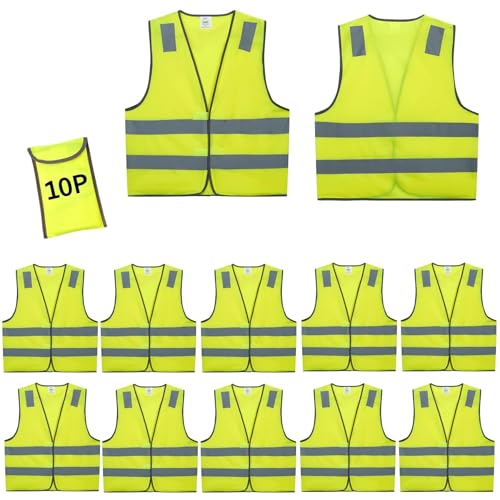 LAVORI AK Lavori-AK Safety Vests 10 Pack - Yellow Reflective High Visibility…
View on Amazon ↗
 JKSAFETY JKSafety Safety Vest for Men Women Hi Vis Vest with…
View on Amazon ↗
 DASHER PRODUCTS High Visibility Safety Vest – ANSI Class 2 Breakaway Vest…
View on Amazon ↗
Listing names and images come from Amazon and are rechecked against the live listings; last checked Nov 8, 2026. No prices shown; the current price is on the listing.
About this guide. This guide covers the high visibility safety vest category as a whole, not individual models. It is written from general knowledge of how these vests are made and used. For any specific vest, check the listing for the exact tape width, fabric material, and the standard it meets.