A capo works only if its pressure is even across all six strings and its pad matches your fretboard radius. Spring capos suit quick key changes, while screw or yoke designs give more control over tension. The real decision is whether you value speed or tuning stability. Skip lightweight trigger models if your guitar has a pronounced radius or tall frets.
Pressure Style Is the First Fork
The mechanism that squeezes the strings decides how often you retune. A spring trigger clamps with a fixed force set by the spring, which is fast but can press too hard on the treble side or too light on the bass side. A screw capo lets you tighten until the strings ring clean, but changing keys takes longer. A yoke capo wraps around the neck and tightens from the back, spreading pressure more evenly.
For home practice or a school band, a spring capo often feels like the obvious choice because one hand is enough. For recording or a guitar with a rounder fretboard, a screw or yoke design is less likely to shift pitch. Check the listing for the pressure type and whether the tension is adjustable.
Pad Shape Must Follow the Fretboard
The rubber pad that touches the strings comes in flat and radiused profiles. A flat pad on a curved fretboard pushes harder on the middle strings and can leave the outer strings buzzing. A radiused pad, often listed as matching a common radius like 9.5 or 12 inches, follows the curve and presses all six strings closer to evenly.
Compare the pad shape in the listing to your guitar's fretboard radius. If you do not know the radius, a flat pad on a classical or older acoustic guitar is riskier. Electric guitars and modern acoustics often have a consistent radius, which makes a matched pad more predictable.
Storage Weight Is a Daily Detail
A capo that stays clipped behind the nut or on the headstock adds mass to the neck. A heavy yoke capo can make the neck feel different when you move up the fretboard. A slim spring capo usually weighs less, but some budget models use a stiff spring that fights your hand.
Think about where the capo lives when you are not using it. If it goes in a case pocket, size matters less. If it stays on the guitar, a lighter design with a low profile is easier to ignore. Compare the listed weight and the shape of the clamp arms.
Feature Calls That Matter and Ones That Do Not
Some listings lead with silicone pads, zinc alloy frames, or extra springs. Silicone is a reasonable pad material because it grips without marring the finish, but the pad shape matters more than the material name. A zinc alloy frame is common and neither good nor bad on its own.
The features worth confirming are the pad shape, the pressure mechanism, and whether the capo clears the guitar's neck profile. Marketing phrases like 'aircraft grade' or 'professional tone' tell you nothing about fit. Ask the seller for the pad radius and the maximum neck width if the listing is vague.
- Check pad radius against your fretboard, not just the material.
- Ask the seller for maximum neck width if you play a wide neck or 12 string.
- Ignore metal grade claims; check the clamp's contact points instead.
Where Each Capo Style Earns Its Place
Traveling musicians usually want a spring capo for quick changes in a set and a small size for a carry on case. Beginners benefit from a screw capo because it forces a slower, more careful placement, which teaches what clean pressure feels like. School bands often share capos, so a rugged spring design with a simple hinge survives better than a small screw knob that can strip.
Outdoor rehearsals introduce temperature shifts, which slacken strings and change how much tension a capo needs. A screw or yoke capo can be retightened as the strings move, while a spring capo has no adjustment. Home practice is the most forgiving setting, which is why a basic spring capo is common there.
| Pressure style | Speed | Tuning stability | Best setting |
|---|---|---|---|
| Spring trigger | Fastest | Fair, fixed tension | Live sets, quick changes |
| Screw | Slow | Good, adjustable | Beginners, changing temperatures |
| Yoke | Slowest | Best, even contact | Recording, curved boards |
| Partial | Varies | Varies, open strings | Alternate tunings only |
A partial capo covers only some strings and suits open tunings or drone notes. It is not a replacement for a standard capo and adds a learning curve. Most buyers should start with a full pressure capo and add a partial only if a specific tuning calls for it.
The Capo Habit That Causes Tuning Drift
Clamping the capo too far behind the fret is the most common mistake. The capo belongs just behind the fret, close enough that the string does not bend sharp when pressed. Placing it in the middle of the fret space means the string has room to stretch, which pulls the pitch up.
A second mistake is clamping at an angle. The pad should sit parallel to the fret, not tilted toward the bass or treble side. An angled capo presses one side harder and leaves the other side dull. Check the capo's alignment every time you move it, especially on a spring model that can twist as it closes.
Buyers also ignore the neck profile. A capo that fits a slim electric neck may not open wide enough for a chunky acoustic or a 12 string. The listing should state the maximum neck width or the opening depth. If it does not, ask before you buy.
Long Term Costs Stay Low, Pads Do Not
A capo has no battery, no consumable, and no routine maintenance beyond wiping the pad. The pad itself wears slowly, but a torn or hardened pad stops pressing evenly and should be replaced. Some designs allow pad replacement, while others require a whole new capo.
Springs can weaken after years of use, especially on budget models that stay clamped on the headstock. A weak spring no longer holds the strings firmly, which causes buzzing. Screw and yoke capos wear less because the pressure is set by hand each time. The long term cost is still low for most players, but a replaceable pad is worth checking if you play daily.
Read the Listing Like a Setup Check
Before you buy, the listing should answer four questions. What is the pressure style? What is the pad shape and radius? What is the maximum neck width? How much does it weigh? If any answer is missing, ask the seller or move on.
Compare those answers to your guitar, not to the price. A mid range screw capo that matches your radius will outplay a premium spring capo that does not. The reverse is true if you change keys between songs and rarely check tuning. Fit is the whole game.
For more on getting clean sound from your instrument, see our other acoustic pickup guides and the musical instruments department.
Guitar Capo Questions Worth Asking First
Which guitar capo is best for a beginner?
A screw capo is the safer first choice. It forces you to tighten slowly and listen for clean notes, which teaches the right pressure. Spring capos are faster but hide the feel of too much or too little tension. Look for a pad that matches your guitar's radius and a screw that turns smoothly.
Is a guitar capo worth it for home practice?
Yes, if you want to play songs in different keys without learning new chord shapes. A basic spring or screw capo costs little and lasts for years. The value is in convenience, not tone. If you only play in one key or use a piano, you may not need one.
How do I know if a capo will fit my guitar?
Check two numbers: the maximum neck width the capo opens to and the pad radius. The neck width must be larger than your guitar's nut width. The pad radius should match your fretboard radius, often 9.5, 12, or 16 inches. If the listing omits either, ask the seller.
Should I buy a spring or screw capo?
Choose spring if you change keys quickly during a set and accept occasional retuning. Choose screw or yoke if you record, play a curved fretboard, or dislike tuning drift. The spring's fixed tension is the tradeoff for its speed.
What is a partial capo used for?
A partial capo clamps only some strings, leaving others open. Players use it for alternate tunings, drone notes, and chord voicings that are impossible with a full capo. It is a specialty tool, not a substitute for a standard capo, and most beginners should skip it.
The Capo to Buy for Your Neck and Your Set
A player who changes keys mid set and plays a modern electric or acoustic with a consistent radius should buy a slim spring capo with a radiused pad. It clips on in one motion and stores behind the nut without weighing down the neck. For a recording player or anyone with a strongly curved fretboard, a yoke capo is the better call. Its even pressure keeps all six strings in tune, which matters more than speed when the take is rolling.
Real guitar capo listings, so you can check the points in this guide against actual products. These are affiliate links: as an Amazon Associate we earn from qualifying purchases, at no extra cost to you.
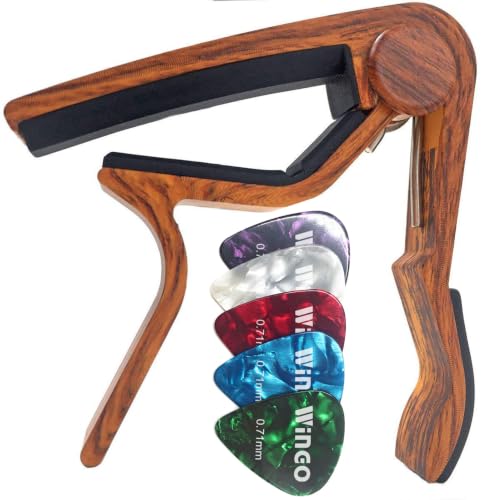 WINGO WINGO Guitar Capo for Acoustic Electric Guitars-Rosewood Color with 5…
View on Amazon ↗
 KYSER Kyser Quick-Change Guitar Capo for 6-string acoustic guitars, Black, KG6BA
View on Amazon ↗
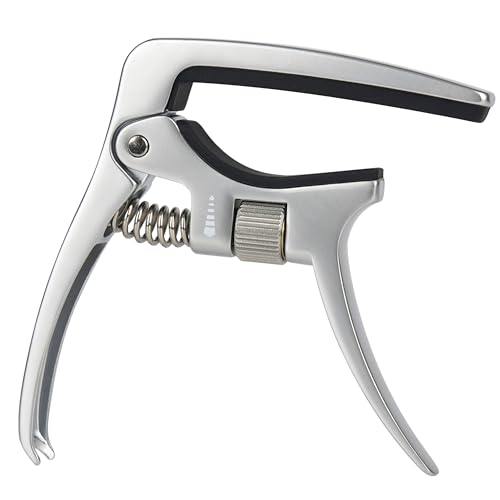 SONDERY Sondery Capo Professional for Acoustic and Electric Guitars, Trigger Tension…
View on Amazon ↗
Listing names and images come from Amazon and are rechecked against the live listings; last checked Nov 8, 2026. No prices shown; the current price is on the listing.
What this guide is. Use this guide as a checklist to hold against any listing, not as a verdict on a specific model. It is written from general knowledge of guitar capo design, without individual product documents or tests, so confirm any dimension on the listing before you buy.