A grill cover protects by blocking rain and UV, but it must also fit snugly and let moisture escape. Focus on material, fit, and venting. Polyester with a water resistant backing suits mild climates, while vinyl handles harsh sun and heavy rain. The main tradeoff is waterproofing against breathability: a fully sealed cover traps condensation and speeds rust.
The Three Decisions That Change the Result
Material sets the ceiling for how long a cover lasts. A water resistant polyester with a coated back is the middle ground: it repels rain, blocks some UV, and stays light enough to pull on and off. Vinyl is heavier and seals out water almost completely, but it can crack in freezing weather and holds heat against the grill.
Fit matters more than most buyers expect. A cover that is too large flaps in wind, rubs the grill, and lets rain run under the hem. A cover that is too tight is hard to put on and can trap moisture against the metal. Check the listing for the cover's length, width, and height, then compare those to your grill, not to the grill's model name.
Venting is the feature that separates a cover that protects from one that quietly causes rust. Small mesh vents or a hem that sits slightly off the ground let humid air escape. Without that airflow, condensation forms inside on cool nights, and that moisture attacks the grill more than the rain the cover is blocking.
How the Main Cover Types Compare
Most grill covers fall into three construction types. The table below lines them up by protection, cleanup, and the situation where each one fits best.
| Material type | Water protection | Cleanup effort | Suits |
|---|---|---|---|
| Vinyl | Highest; nearly waterproof | Wipe down, but can crack over time | Open yards with strong sun, rain, or snow |
| Coated polyester | High; repels rain and snow | Brush or hose off, air dry | Most patios and decks with moderate weather |
| Canvas or duck | Moderate; needs a water repellent finish | Machine wash sometimes, but heavy when wet | Covered porches or dry climates |
| Uncoated polyester | Low; light rain only | Easy to shake out and wash | Indoor storage or a fully covered space |
A cover listed as water resistant is not the same as waterproof. Water resistant means it sheds light rain for a while; waterproof means water should not pass through at all. For a grill left out year round, waterproof or close to it makes sense. For a grill under an awning, a breathable fabric may do more good.
Reading a Listing Before You Buy
Start with the dimensions, not the photo. A cover that looks right in the picture may be sized for a compact kettle when you own a four burner gas grill. Write down your grill's height, width, and depth, then look for a cover that exceeds each by an inch or two at most.
Check the material description for three things: the fabric, any backing or coating, and whether the seams are sealed. Seams are where water gets in first. A listing that says taped or welded seams will hold up longer than one that only mentions the fabric.
Look for how the cover stays put. Elastic hems, drawstrings, and straps are signs it will not blow off in a storm. A cover with none of those may be fine in a sheltered corner, but not on a windy deck.
The Mistake That Ruins a Good Grill
The most common mistake is covering a hot grill. A cover traps heat, and the underside can melt or stick to the metal. Wait until the grill has cooled completely before putting the cover on. This also keeps grease from baking onto the fabric.
Another mistake is buying a universal cover and hoping it fits. Universal covers are sized in broad ranges, and a cover made for a 60 inch grill will sag on a 40 inch one. The extra fabric pools water and catches wind.
Skipping the cover entirely in a dry climate can also be a problem. Dust, tree sap, and bird droppings still land on the grill, and a light cover keeps those off even when rain is rare.
What to Ask the Seller
Ask whether the cover is water resistant or fully waterproof, and what that means for the fabric's backing. Ask if the seams are sealed or taped. Ask for the inside dimensions, not just the outside, because a thick fabric can change the fit.
Ask how the cover handles freezing temperatures if you live where it gets cold. Some coated fabrics become stiff and crack. Ask whether the cover has vents, and where they are placed. Vents near the top let heat out; vents near the bottom let air in without letting rain splash up.
Finally, ask about the warranty period for fading and seam failure. A cover that fades is ugly, but a cover with a failed seam lets water straight through.
Care That Keeps a Cover Working
Clean a cover twice a year, more often if it sits under trees. Shake off dust, then rinse with a hose and a soft brush. Avoid harsh detergents, which can strip the water repellent finish. Let it dry completely before putting it back on the grill.
Inspect the seams and straps each season. A small tear at a seam becomes a large leak after a few storms. Repair tape made for outdoor fabric can extend the life by a year or two. Store the cover flat or loosely folded when it is not in use; creases weaken the fabric over time.
Long term, every cover wears out. A premium cover may last several years, while a budget one may need replacing after one or two. The cost of a new cover is usually less than the cost of rust repair on the grill itself.
When a Cover Is the Wrong Fix
A cover cannot fix a grill that already leaks or has rust. If the grill body is corroding, a cover will slow the damage but not stop it, and the trapped moisture can make it worse. Repair or replace the grill before investing in a good cover.
If you use the grill every day, a cover can become a chore. Taking a fitted cover off and on daily wears the fabric and the seams. In that case, a lighter cover or a grill gazebo may make more sense. For occasional cooks, the cover earns its place.
In a very humid coastal area, even a vented cover may not be enough. Salt air corrodes metal quickly, and a cover holds that salty moisture close. Look for a cover with large vents and wash it more often, or consider moving the grill to a more protected spot.
Grill Cover Questions Buyers Ask Most
Is a grill cover worth buying?
Yes, if the grill stays outside and you use it less than a few times a week. A cover blocks rain, UV, and debris that cause rust and fade the finish. It is not worth it for a grill stored in a garage or used daily, where the cover becomes a hassle and traps heat.
Which grill cover material lasts longest?
Vinyl generally lasts longest in harsh sun and rain, but it can crack in freezing weather and is heavy. A coated polyester with sealed seams often lasts several years and is easier to handle. Longevity depends more on fit and seam quality than on material alone.
Should I buy a waterproof or a breathable grill cover?
For an uncovered patio in a rainy climate, choose waterproof with vents. For a covered porch or a dry climate, choose a breathable fabric like canvas or uncoated polyester. A fully waterproof cover without vents traps condensation, which can rust the grill faster than the rain.
How do I know what size grill cover to get?
Measure the grill's width, depth, and height at its widest points, including side shelves if they stay attached. Add an inch or two to each dimension. Compare those numbers to the cover's listed inside dimensions, not to the grill's model name or a generic small, medium, large label.
Can I put a grill cover on a warm grill?
No. Wait until the grill is completely cool. A cover placed on a warm grill can melt or fuse to the metal, and the trapped heat bakes grease into the fabric. This shortens the cover's life and makes it hard to clean.
The Cover That Fits Most Outdoor Cooks
A home cook with a standard gas or charcoal grill on an open patio, in a place with regular rain and sun, gets the best balance from a coated polyester cover with sealed seams, a snug elastic hem, and two small vents. It repels water, lets air move, and lasts several seasons without cracking. For a grill that sits fully exposed near the ocean or under brutal desert sun, step up to a heavy vinyl cover with extra UV resistance and wide vents.
Real grill cover listings, so you can check the points in this guide against actual products. These are affiliate links: as an Amazon Associate we earn from qualifying purchases, at no extra cost to you.
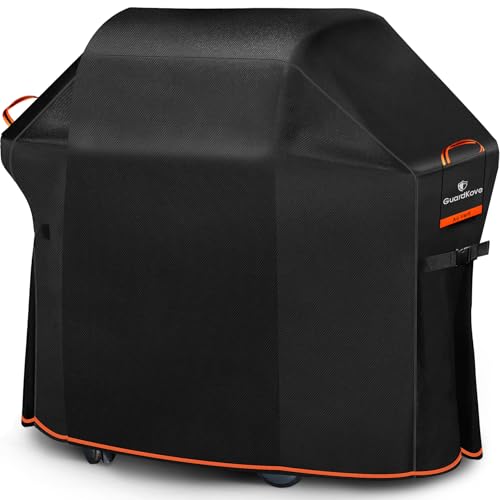 GUARDKOVE [Upgraded 1000D Heavy Duty Fabric] 60 inch Grill Cover for…
View on Amazon ↗
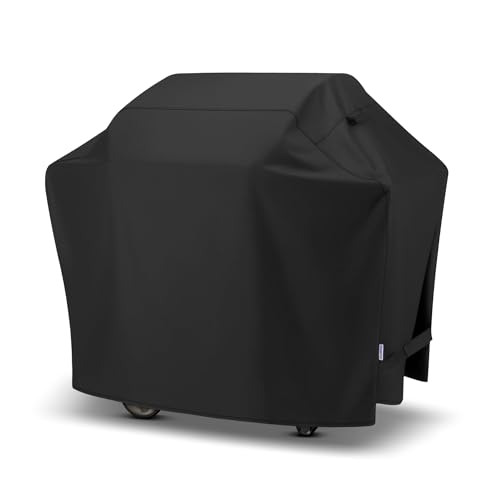 SUNPATIO SunPatio 55 Inch Grill Cover for Outdoor Grill Heavy Duty…
View on Amazon ↗
 VIBOOS Grill Cover, 58 inch BBQ Gas Grill Cover for Outdoor…
View on Amazon ↗
Listing names and images come from Amazon and are rechecked against the live listings; last checked Nov 8, 2026. No prices shown; the current price is on the listing.
About this guide. This guide covers the product type as a whole, not any single model. Use it as a checklist to hold against any listing you are considering, and confirm the dimensions on the product page before you buy.