The power source and beam angle decide most of the result. A wired spotlight gives steady brightness and control for a permanent feature, while a solar model trades brightness for easy placement with no cables. Match the beam width to the object: a narrow beam for a tree or statue, a wide beam for a wall or walkway.
Power Source Sets the Ceiling
Power source is the first decision because it limits everything else. A line voltage spotlight, wired directly to a household circuit, can run a high lumen bulb all night and work with a wall switch or timer. It also needs a junction box and often a buried conduit, which makes it a job for an electrician in most areas.
Low voltage models run on a transformer that plugs into an outdoor outlet. You can often install the cable yourself, but the transformer limits total wattage, so adding more lights later may mean a second transformer. Check the listing for the transformer capacity and the wire gauge, since thin wire loses voltage over long runs.
Solar spotlights avoid wiring altogether, but their brightness depends on daytime sun and the battery inside. A panel that gets four hours of shade will not fill the battery, and the light will dim early. Place a solar model only where the panel sees direct sun for most of the day.
Battery powered spotlights are the most portable, but they sit at the bottom for brightness. They suit a rental or a temporary event where you cannot run a cable. Rechargeable cells add a long term cost and a weekly chore.
Beam Angle Shapes the Scene
A spotlight is not a floodlight. The beam angle, measured in degrees, tells you how wide the circle of light spreads. A narrow beam of 15 to 30 degrees works for a single tree trunk, a statue or an architectural column. A wide beam of 60 degrees or more washes a wall, a hedge or a low planting bed.
Many listings give only the lumen output, but lumens alone do not tell you how bright the lit object will look. The same 500 lumens in a 20 degree beam puts far more light on a small area than it does in a 90 degree beam. Check the beam angle before the lumen number.
Some models have an adjustable head or a lens that changes the beam. That flexibility helps if you plan to move the light as the garden grows, but a fixed narrow beam is often better sealed against water.
Warm or Cool Light Changes the Mood
Light color is measured in kelvin. A warm white around 2700K to 3000K makes brick, wood and green foliage look natural and inviting. A cool white above 5000K reads as bright and crisp, which can suit a modern white wall but often makes a garden look harsh.
For most gardens, warm white is the safer choice. It blends with existing porch lights and does not wash out the colors of plants. Cool white can be useful for a security area or a driveway where you want maximum perceived brightness.
Some spotlights offer a color changing mode. That feature is fun for a party but rarely used after the first month. A single warm white LED is usually the better long term choice.
Check the Listing Like a Wiring Diagram
Before you buy, read the listing for the physical details that photos hide. Check the cable length on a wired model: a 10 foot lead will not reach a tree 15 feet from the outlet. Check the stake height and head adjustment, since a light that cannot tilt will point at the sky or the ground instead of the object.
Look for the IP rating, which tells you how well the housing resists water and dust. IP65 is the minimum for a light that sits in rain and sprinkler spray. IP67 means it can survive brief immersion, which matters if the spot sits in a low bed that puddles.
Ask the seller about the replaceable parts. A sealed LED unit cannot be repaired when the diode fails, while a model with a replaceable bulb costs less to maintain over time. Ask whether the stake is metal or plastic: a metal stake survives rocky soil and wind, while a plastic one can snap during installation.
| Power type | Brightness ceiling | Installation effort | Best for |
|---|---|---|---|
| Solar | Low to medium | None, stake in ground | Rentals, spots far from outlets |
| Battery powered | Low | None, portable | Temporary parties, no sun exposure |
| Low voltage wired | Medium to high | DIY cable run | Permanent beds, walkways |
| Line voltage wired | High | Electrician needed | Driveways, large trees, security |
A low voltage kit with multiple spotlights often costs less than buying separate lights and a transformer. Check that the kit includes enough cable and that the transformer has spare capacity for one or two extra heads.
Where Each Use Case Fails
Dark walkways need a wide beam and a low mounting height so the light falls on the path, not into your eyes. A narrow beam aimed along the walkway creates bright spots and dark gaps. Space the lights close enough that the pools of light overlap.
Garden parties reward a light you can move. A battery powered or solar spotlight lets you place a pool of light near a table or a food station without running a cord across the lawn. Wired models are harder to reposition when the party moves indoors.
Back patios and driveways often have an outlet nearby, which makes a low voltage wired spotlight the most dependable choice. For a driveway, choose a cool white or a high lumen warm white so the light reaches across the full width.
Rental homes push you toward solar or battery power. You cannot cut into the walls or bury a cable, and you want to take the light with you when you leave. A stake mounted solar spotlight is the least invasive option.
The Mistake That Ruins a Spotlight
The most common mistake is buying a spotlight for the wrong object. A narrow beam aimed at a wide hedge lights only a small circle, and a wide beam aimed at a thin tree spills light onto the neighbor's window. Walk the garden at dusk with a flashlight and mark where you want each pool of light before you choose a beam angle.
Another mistake is ignoring the mounting surface. A stake light will not stand in gravel or on a deck. Some models include a wall mount bracket, which lets you attach the light to a fence or a post instead of stabbing it into the soil. Check the listing for both mounting options.
Overbuying brightness is common. A 2000 lumen spotlight aimed at a small shrub will glare and create harsh shadows. Start with a lower lumen model and add a second light if the area still looks dark. Two 400 lumen lights often look better than one 800 lumen light because the shadows are softer.
Maintenance and Long Term Costs
Solar spotlights need the panel cleaned every few weeks. Dust and pollen cut the charge, and the light dims even though the LED still works. In winter, a solar model may not run at all in northern latitudes, so plan for a dark period or switch to a wired light for the cold months.
Wired spotlights cost more up front but have lower running costs. The LED itself lasts for years, but the transformer or the cable connections can corrode. Check the connections once a year and coat them with dielectric grease if the listing recommends it.
Rechargeable batteries in solar and battery powered models wear out. After two to three years of daily cycles, the battery holds less charge and the runtime drops. A model with a replaceable battery is worth the extra cost because you can swap the cell instead of the whole light.
When to Skip the Spotlight
A garden spotlight is the wrong tool for lighting a broad area. If you want to light a whole patio or a long path evenly, a floodlight or a path light with a wide, low glare lens works better. A spotlight creates a bright center and a dark edge, which is good for an accent but poor for general visibility.
Skip a spotlight if the object you want to light is close to a bedroom window. A beam aimed slightly upward will spill into the neighbor's house and cause glare. In that case, a low mounted path light or a shielded bollard is the more neighborly choice.
For a temporary event like a single evening party, a rented or borrowed work light may be more practical than buying and installing a permanent spotlight. A battery powered lantern or a string of outdoor lights can also cover the same need without a dedicated beam.
Garden Spotlight Questions, Answered Straight
How many lumens does a garden spotlight need?
For a small tree or shrub, 200 to 400 lumens is often enough. For a large tree or a wall, 500 to 1000 lumens works better. The beam angle matters more than the lumen number: a narrow beam concentrates the lumens, so a 300 lumen narrow spotlight can look brighter on a trunk than an 800 lumen wide one.
Is a solar garden spotlight worth it?
It is worth it if the panel gets direct sun for most of the day and you accept dimmer light in winter. Solar models are the easiest to install and move, which suits rentals and temporary setups. If you need steady brightness every night, a wired model is the more dependable choice.
What is the difference between a spotlight and a floodlight?
A spotlight has a narrow beam, usually under 45 degrees, and throws light a long distance onto a small object. A floodlight has a wide beam, usually over 60 degrees, and washes a broad area with even light. Use a spotlight for a tree or statue, a floodlight for a patio or driveway.
Can I install a wired garden spotlight myself?
Low voltage systems are designed for DIY installation because the transformer plugs into a standard outdoor outlet and the cable is safe to bury shallowly. Line voltage spotlights require a junction box and conduit, and most local codes require a licensed electrician. Check your local rules before starting.
Which garden spotlight works for a dark walkway?
Choose a low voltage wired model with a wide beam, at least 60 degrees, and a warm white color around 3000K. Mount the light low and aim it downward so the beam falls on the path. Space the lights so the pools of light just overlap, usually every 6 to 8 feet.
Which Garden Spotlight Fits Your Yard
A buyer lighting a permanent tree or an architectural feature should start with a low voltage wired spotlight, a narrow beam of 20 to 30 degrees, and a warm white LED around 3000K. That combination gives dependable brightness and a natural look. If you rent or want to light a party area without running a cable, choose a stake mounted solar spotlight with a wide beam and a replaceable battery instead.
Real garden spotlight listings, so you can check the points in this guide against actual products. These are affiliate links: as an Amazon Associate we earn from qualifying purchases, at no extra cost to you.
 SUNVIE SUNVIE Low Voltage LED Landscape Lights Spot Lights with Connectors…
View on Amazon ↗
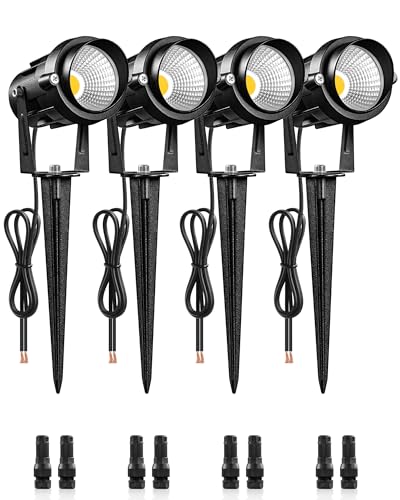 WILAWELS WILAWELS 6W 700LM Low Voltage Landscape Lighting, 12V AC/DC 3000K…
View on Amazon ↗
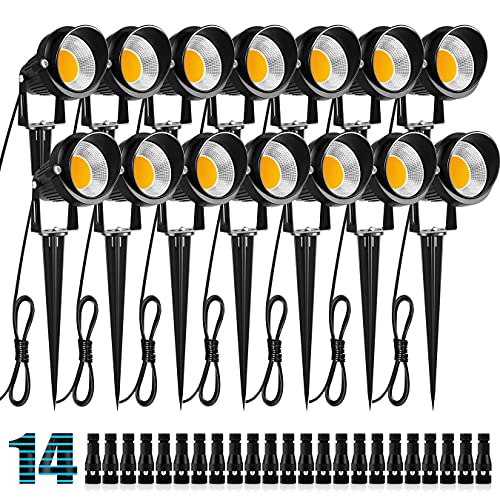 ZUCKEO ZUCKEO 10W Low Voltage Landscape Lights LED Landscape Lighting with…
View on Amazon ↗
Listing names and images come from Amazon and are rechecked against the live listings; last checked Nov 8, 2026. No prices shown; the current price is on the listing.
Scope and limits. Use this guide as a checklist to hold against any listing you open: check the power source, beam angle, light color, IP rating and mounting options before you buy. This guide covers the garden spotlight category as a whole, not individual models, so verify every dimension and rating on the product page before you order.