Focus on three things: engraving method, base metal, and attachment style. Laser engraving stays legible longer than stamped or painted text. A thicker brass or stainless steel blank resists bending and scratching. A split ring survives daily use better than a thin clasp. Skip soft aluminum and shallow etching if the keychain rides in a pocket with keys.
Read the Engraving Method Before You Personalize
The engraving method determines whether the text stays legible after months of rubbing against keys and coins. Laser engraving removes a small amount of metal and leaves a recessed mark that does not rub off. It works well on stainless steel, brass, and coated aluminum. Check the listing for the word laser and a close up photo showing the depth of the mark.
Stamped engraving presses letters into the metal. The impression can be shallow on thin blanks and may become hard to read as the surface scratches. Diamond drag engraving is another option; it scratches a fine line without removing material and suits harder metals. If the listing only says engraved without naming a method, ask the seller how deep the mark is.
The Base Metal Sets the Daily Wear Limit
A keychain lives in a pocket or bag with sharp keys, zippers, and coins. Soft metals like thin aluminum or pewter bend and scratch quickly. Stainless steel resists bending and corrosion but weighs more. Brass offers a warmer look and good durability, though it develops a patina over time. Check the listed thickness; a blank under 1 millimeter thick will flex and dent in daily use.
Coatings change how the metal ages. A clear lacquer on brass slows tarnishing but can chip at the edges. Painted aluminum shows scratches as bright lines. If the listing mentions stainless steel, confirm whether it is solid or plated. Plated zinc or steel can wear through to a different color underneath.
Attachment Style Decides Whether the Keychain Stays Put
A split ring is the standard for good reason: it opens wide enough for a key ring and closes securely. Thin wire rings bend open over time. A lobster clasp or snap hook lets you clip the keychain to a bag strap or belt loop, but the spring mechanism can fail. A simple hole punched in the blank without a ring means the keychain dangles directly from a key ring and can slide off if the hole is too close to the edge.
Check the size of the split ring. A ring under 20 millimeters in diameter is hard to thread onto a thick key ring. The listing should state the ring material; steel rings hold their shape better than chrome plated wire. If the keychain is meant for a bag, look for a clasp rated for the weight of the bag contents.
Text Length and Font Change the Finished Look
A keychain has limited space. Long names, dates, or coordinates need a smaller font, and small engraved text fills in with dirt and skin oil faster than large text. A single line of block letters stays legible at small sizes. Script fonts look elegant in photos but may be hard to read on a curved or textured surface. Before ordering, check the maximum character count the seller allows and ask for a proof.
The surface finish matters too. A mirror polished blank reflects light and can make engraved text hard to read at an angle. A brushed or matte finish diffuses light and improves legibility. If the keychain has a photo or logo, the engraving area shrinks further; make sure the text does not overlap the image.
Where Will the Keychain Actually Live?
A keychain kept in a pocket with keys needs the most durable combination: stainless steel, laser engraving, and a split ring. A keychain clipped to a bag strap sees less abrasion but more swinging and impact, so a clasp with a secure lock is important. A decorative keychain that hangs inside a car or on a desk can be softer metal and more detailed, since it will not be scratched daily.
For a memorial or gift keychain that will be kept in a drawer or shadow box, the priority shifts to the engraving quality and the finish. A thinner brass blank with deep laser engraving works well. For a daily use work badge or gym tag, choose a keychain with a clear protective window or a recessed engraving that will not catch on clothing.
Mistakes That Show Up After the Order Arrives
One common mistake is choosing a very small blank for a long message. The seller may reduce the font size until the text is unreadable. Check the character limits and the sample photo at actual size; a 30 millimeter blank cannot hold three lines of script legibly. Another mistake is assuming that all metal is equally hard; a soft aluminum keychain will bend in a pocket within weeks.
A third mistake is ignoring the attachment. A keychain without a ring or clasp is just a metal tag; you will need to buy a separate ring. A fourth mistake is ordering a plated finish for a keychain that will be carried with keys; the plating wears off at the edges first. Ask the seller what the base metal is under the plating.
Care and Long Term Costs Are Minimal, but Not Zero
A solid metal keychain needs almost no care. Wipe it with a dry cloth to remove pocket lint and skin oil. Brass develops a darker patina; that is normal and does not affect the engraving. If a clear coat chips, reapply a thin metal lacquer or accept the patina. Stainless steel can be polished with a non abrasive cloth if it picks up fine scratches.
The main long term cost is replacement. A cheap keychain that bends or loses its ring will need to be replaced, and the personalization cost is lost. Spending a little more on a solid metal blank and a steel split ring avoids that. If the keychain has a clasp, test the spring every few months; a weak spring can be replaced with a generic clasp from a hardware store.
Comparison by Material and Use
Use this table to match the blank material and attachment to the way the keychain will be carried. The columns reflect the decisions that change daily wear the most.
| Material | Engraving depth | Attachment | Best daily use |
|---|---|---|---|
| Thin aluminum | Shallow | Split ring | Desk or bag charm |
| Brass | Deep laser | Split ring | Pocket with keys |
| Stainless steel | Deep laser | Lobster clasp | Bag strap or work badge |
| Plated zinc | Shallow | Split ring | Occasional use |
Thin aluminum is fine for a decorative charm that hangs inside a car or on a desk. Brass and stainless steel are the practical choices for a keychain that shares a pocket with keys. Plated zinc looks good initially but is the least durable option for daily carry.
Who Should Choose a Different Option
An engraved keychain is a small, personal metal tag. If the person needs to carry many keys, a leather key organizer with a snap closure protects the keys and the pocket better. If the person loses small items often, a keychain with a Bluetooth tracker built in or a larger, brightly colored tag is more useful. If the gift is for someone who does not carry keys, a personalized luggage tag or a desk nameplate will be seen more often.
For a child, a soft silicone or fabric keychain is safer than a metal blank with sharp edges. For a pet tag, choose a product specifically designed for pet tags; the engraving must be deep enough to survive chewing and the attachment must be a split ring rated for a collar. An engraved keychain is also not a bottle opener; the blank is too thin to pry a cap without bending.
Engraved Keychain Questions Before You Order
How deep should the engraving be on a keychain?
Laser engraving typically removes 0.05 to 0.2 millimeters of metal, depending on the material and the power of the machine. A deep mark feels rough when you run a fingernail across it and stays legible after scratching. A shallow etching feels smooth and will fade. Ask the seller for a close up photo of the depth.
Which metal is best for a keychain that stays in a pocket?
Stainless steel is the best choice for a pocket keychain because it resists bending, scratching, and corrosion. Brass is a close second and offers a warmer color, but it tarnishes. Avoid thin aluminum and plated zinc for daily pocket carry; both show wear quickly.
Can an engraved keychain be used as a pet tag?
Yes, if the blank is thick enough and the engraving is deep. A stainless steel blank with laser engraving works well. The split ring must be strong enough for a collar and the text must be large enough to read. Check the sizing against the pet's collar width.
Does the font choice affect how long the engraving lasts?
The font itself does not wear out faster, but very thin or script fonts are harder to read after the surface picks up scratches. Block letters with wider strokes stay legible longer. The engraving depth matters more than the font style.
Is a keychain with a photo engraving less durable?
Photo engraving uses a fine dot pattern to reproduce the image. The dots are very small and can fill with skin oil and dirt, making the photo look faded. A solid metal blank with a deep line engraving is more durable than a photo engraved blank for daily carry.
The Keychain to Pick for Daily Pocket Wear
A person who carries keys in a pocket every day should pick a stainless steel blank, at least 1 millimeter thick, with laser engraved block letters and a 25 millimeter steel split ring. That combination survives bending, scratching, and corrosion without losing legibility. For a memorial or keepsake keychain kept in a drawer, a thinner brass blank with deep laser engraving and a smaller ring looks better and costs less, since it will not face daily abrasion.
Real engraved keychain listings, so you can check the points in this guide against actual products. These are affiliate links: as an Amazon Associate we earn from qualifying purchases, at no extra cost to you.
 WRINGKIT WRINGKIT 30 Pcs Engravable Metal Keychain Blanks, Stainless Steel |…
View on Amazon ↗
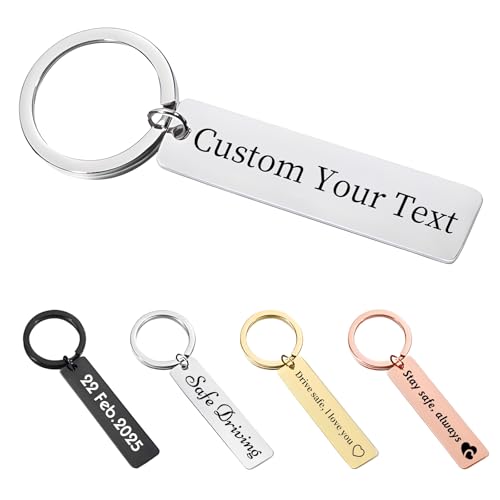 CDBUY CDBUY Custom Engraved Name Keychain for Men and Women |…
View on Amazon ↗
 HUBBGDESIGN HubbgDesign Key Chain Drive Safe I Love You Engraved Initial…
View on Amazon ↗
Listing names and images come from Amazon and are rechecked against the live listings; last checked Nov 8, 2026. No prices shown; the current price is on the listing.
How to read this guide. Use this guide as a checklist against any engraved keychain listing. It describes the product type in general, not any individual model, so verify the metal thickness, engraving depth, and ring size on the listing before ordering.