Start with the spaces you inspect most: pipe diameter, wall cavities, engine bays, or duct runs. That decides cable length, head size, and stiffness. Then check whether you need a standalone screen or a phone connection. Resolution and adjustable lighting matter more than extra accessories. The main tradeoff is reach and articulation against image detail and durability on a budget.
Match the Probe to the Opening
The camera head diameter sets a hard limit. A head that does not fit through a drain cleanout, spark plug hole, or wall access point is useless for that job. Measure the smallest opening you expect to enter, then choose a head at least a couple millimeters narrower.
Plumbers and drain inspectors often need heads around 8 to 12 millimeters for residential lines. HVAC technicians checking heat exchangers or duct seams may need a head under 8 millimeters. Automotive work varies: cylinder bores need a small head, while body cavities allow larger ones.
Do not assume a smaller head is always better. Tiny heads often pair with lower resolution sensors and weaker lighting. Pick the largest head that fits your usual openings.
Cable Length and Stiffness Change What You Can Reach
Cable length ranges from about 1 meter for close up work to 10 meters or more for long duct runs and deep drains. Longer cables add weight and can be harder to push through turns. Compare the cable's stiffness: a semirigid cable holds a curve and can be steered by rotating the grip, while a very flexible cable follows gravity and may bunch up.
For straight pipes and engine cylinders, a rigid or semirigid cable gives more control. For ductwork with bends, a flexible cable with a stiff push rod or a cable that holds its shape works better. Check the listing for the minimum bend radius if you need to navigate elbows.
A common mistake is buying the longest cable available without checking how it transmits. Some long cables lose image brightness or signal quality at the far end. Look for a cable with a built in light source at the tip, not at the handle.
Standalone Screen or Phone Connection
A built in display keeps the tool self contained. You turn it on and inspect, without pairing, adapters, or app permissions. That is faster for a maintenance tech who moves between machines. The tradeoff is a smaller, often lower resolution screen and a battery to keep charged.
A phone or tablet connection uses a larger, sharper display and lets you record or share footage easily. But the connection can be finicky: some apps require specific USB or Wi-Fi settings, and the phone's battery drains during long inspections. Check whether the listing names your phone's operating system and connector type.
If you work with gloves on, a standalone screen with physical buttons may be easier than a touchscreen app. If you need to send a photo to a client or supervisor, a phone connection saves a step.
How to Read a Listing Before You Buy
Ignore the marketing phrase 'HD' and check the actual sensor resolution, usually listed as a pixel count like 1280x720 or 1920x1080. A higher number means more detail, but only if the lens and lighting can deliver it. Check the field of view: a wider angle shows more context but distorts edges; a narrower angle gives a flatter, more measurable view.
Look for the illumination type and adjustable brightness. LEDs at the tip are standard, but some cameras let you dim them to avoid glare on shiny surfaces. Check whether the light level is fixed or adjustable, because a bright reflection can wash out a crack or corrosion spot.
Ask the seller about the cable material and waterproof rating if you will use it in wet drains or coolant passages. An IP67 rating means it can survive brief immersion, but not all probes are rated for oil or chemicals. Confirm the working temperature range for engine or furnace inspections.
Mistakes That Lead to a Useless Camera
Buying for the one weird job instead of the weekly job is the biggest error. A 10 meter articulating camera sounds impressive, but if you mostly check wall outlets and small fittings, it is heavy, expensive, and hard to maneuver. Buy for the space you enter most often.
Another mistake is ignoring the cable's pushability. A very flexible cable cannot be pushed through a long pipe; it folds inside. A very stiff cable cannot make a 90 degree turn. The listing rarely says 'pushability', so look at the cable thickness and material, and check the manufacturer's stated minimum bend radius.
Some buyers assume a higher price means a better image. That is not reliable. A mid range camera with a good sensor and adjustable lighting can outperform a premium one with extra accessories you never use. Compare resolution, head size, and light control before the accessory kit.
Where the Design Types Diverge
| Probe style | Best reach | Image control | Durability | Suits |
|---|---|---|---|---|
| Rigid borescope | Short, straight | Fixed view | High, simple | Cylinders, small ports |
| Semirigid cable | Medium, some bends | Rotate to steer | Medium | Drains, wall cavities |
| Flexible probe | Long, many bends | Follows path | Medium | Ducts, long pipes |
| Articulating head | Long, precise | Two way tip control | Lower, complex | HVAC, engine bays |
A rigid borescope is the simplest to clean and hardest to break, but it only works where you have a straight line of sight. A semirigid cable is the most common middle ground: stiff enough to push, flexible enough to follow gentle curves. An articulating head gives the best view control but costs more and has more moving parts to fail.
Lighting and Image Quality Matter More Than Accessories
The tip light is the single most underrated feature. A dim or uneven light makes even a high resolution sensor useless in a dark pipe. Look for a camera with multiple LEDs around the lens and an adjustable brightness setting. Some cameras let you switch between front and side lighting, which helps when the target is on the pipe wall rather than straight ahead.
Resolution is important, but so is the lens quality and the sensor's low light performance. A 2 megapixel camera with a clean lens and good lighting can beat a 5 megapixel camera with a plastic lens and a single dim LED. Check sample images in the listing if they are provided, but remember those are often taken under ideal conditions.
Accessories like hooks, magnets, and mirrors sound useful, but most techs use the basic probe 90 percent of the time. A magnetic tip can retrieve a dropped screw, and a side mirror helps inspect threads, but do not pay extra for a kit full of attachments you will leave in the case.
Maintenance and Long Term Costs
The cable and head are the wear items. Wipe them down after every use, especially after drains or engine oil. Check the waterproof seals around the head and connector. A cracked seal lets moisture into the sensor and kills the camera.
Batteries in standalone screens degrade over time. Some models have replaceable batteries; others are sealed and must be sent in for service. Check the listing before you buy if you use the camera daily. Phone connected cameras avoid this but wear out your phone's port and battery.
Replacement cables are not always available. Some budget cameras are designed to be thrown away when the cable kinks or the lens scratches. If you use the tool daily, look for a brand that sells replacement probes or has a service program. That is a long term cost many buyers ignore.
Who Should Skip a Dedicated Endoscope Camera
If you only need to look under a sink once a year, a cheap phone connected borescope is fine, and you may already have one in your toolkit. But if you inspect machinery weekly, a dedicated standalone unit with a durable cable pays for itself in time saved.
For very small, high precision work like inspecting circuit boards or tiny fittings, a bench inspection scope is a better fit than an endoscope. An endoscope is for cavities and pipes, not for surface work under magnification.
If you need to document findings with measurements, look for a camera with on screen scale or a known field of view. Otherwise, consider a dial indicator for a field kit to take precise measurements alongside your visual inspection.
Electrical and Facility Work Have Different Demands
Electrical inspections require a nonconductive probe tip and a camera that does not create a short circuit risk. Check the listing for insulation ratings if you work inside live panels. A plastic or coated head is safer than bare metal.
Facility maintenance covers everything from HVAC grilles to elevator shafts. A versatile semirigid cable around 3 to 5 meters covers most of these jobs. If you also inspect drains, choose a camera with a waterproof head and a smooth outer jacket that does not snag on pipe scale.
Automotive workshops need a camera that tolerates oil, coolant, and heat. Look for a probe rated for fluids and a temperature range that covers a warm engine bay. A magnetic tip helps retrieve dropped fasteners, and a side view mirror helps inspect valve seats and cylinder walls.
Endoscope Camera Questions Before You Buy
What is the difference between a borescope and an endoscope?
The terms are used interchangeably, but a borescope usually has a rigid or semirigid tube for industrial use, while an endoscope originally referred to a medical device. For inspection cameras, 'endoscope' is the common retail term for a flexible probe with a camera and light at the tip. Check the cable stiffness and head diameter rather than the name.
How do I choose the right cable length for my work?
Measure the longest run you need to inspect, then add a little slack. For most home and auto work, 2 to 5 meters is enough. HVAC duct runs and deep drains may need 7 to 10 meters. Longer cables are harder to push and can lose image quality at the far end, so do not buy length you will not use.
Is a phone connected endoscope camera worth it?
For occasional use, yes. The phone provides a large screen and easy recording, and the camera itself is cheaper. For daily professional use, a standalone screen is faster to start and does not drain your phone battery. Check app compatibility with your specific phone model and operating system before buying.
Can I use an endoscope camera underwater or in a drain?
Only if the probe and head carry a waterproof rating like IP67 or higher. That rating means brief immersion, not continuous underwater use. Drains and coolant passages are fine for a waterproof probe, but oil and chemicals can degrade the cable jacket over time. Rinse and dry the probe after each wet use.
Which is better for tight spaces: a smaller head or a brighter light?
Both matter, but head size is the first filter. If the head does not fit, nothing else helps. Once it fits, lighting becomes the limiting factor in a dark cavity. Choose the largest head that fits your opening, then look for adjustable LED brightness to avoid glare on shiny surfaces.
Which Endoscope Camera Setup Fits Your Work
A technician who works in drains, wall cavities, and engine bays several times a week should get a semirigid cable camera with a 5 to 8 millimeter head, a 3 to 5 meter cable, and a standalone screen. That setup handles the widest range of jobs without app hassles. If your work is mostly long duct runs or deep pipes, choose a flexible or articulating probe with a 7 to 10 meter cable and a phone connection for documenting findings. Skip the standalone screen there, because reach and image control matter more than convenience.
Real endoscope inspection camera listings, so you can check the points in this guide against actual products. These are affiliate links: as an Amazon Associate we earn from qualifying purchases, at no extra cost to you.
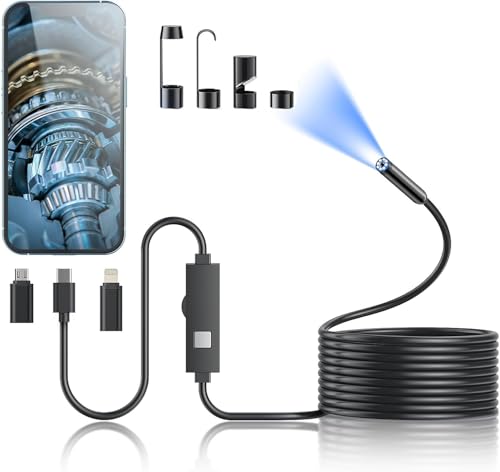 KINPTHY Endoscope Camera with Light,1920P HD Borescope Tools(16.4ft Single Lens) |…
View on Amazon ↗
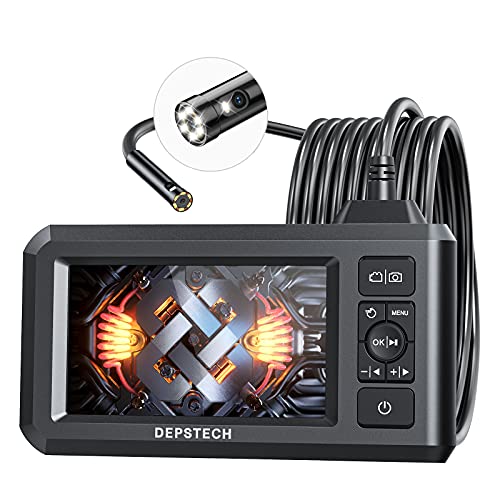 DEPSTECH DEPSTECH Endoscope Camera with Light, Dual Lens Inspection Borescope 16.5FT…
View on Amazon ↗
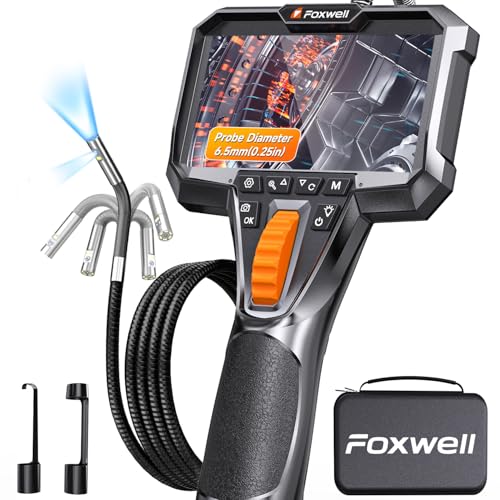 FOXWELL FOXWELL 2-Way 220° Articulating Borescope Camera with Light, Dual Lens…
View on Amazon ↗
Listing names and images come from Amazon and are rechecked against the live listings; last checked Nov 8, 2026. No prices shown; the current price is on the listing.
About this guide. This guide describes endoscope inspection cameras as a category, not any particular model. It is written from general knowledge of how these tools work, without reading individual product documents, reviews, or tests. Check the head diameter, cable length, and waterproof rating on the listing before you buy.