Start with pad material: rubber pads are cheaper and durable, while mesh heads feel closer to acoustic drums and play quieter. Next, check the module for sound quality, expandability, and practice tools. A beginner or apartment player usually wants a compact kit with mesh heads; a performer needs higher quality pads and a module with reliable outputs. The main tradeoff is realistic feel versus cost and space.
Pad Feel Is the First Decision
Rubber pads use a solid surface with a thin layer of cushioning. They are inexpensive, nearly indestructible, and easy to wipe down. The tradeoff is a stiff rebound that can feel bouncy and unnatural, plus a sharp tapping sound from the stick hitting the surface.
Mesh heads stretch a woven fabric over a rim, similar to an acoustic drumhead. They give a more realistic bounce and let you adjust tension. Mesh pads are quieter in terms of stick noise, though the kick pad and cymbal pads still produce some sound. Most mesh kits cost more than rubber equivalents.
Some kits mix the two: mesh for snare and toms, rubber for cymbals and kick. This can be a practical budget option, especially for beginners who will upgrade later.
- Check if the snare pad is mesh or rubber, since it gets the most use.
- Look for adjustable tension on mesh pads if you want to fine tune rebound.
Module Sounds Decide Whether You Keep Playing
The module is the brain that turns pad hits into drum sounds. A good module produces realistic samples, responds to how hard you hit, and lets you adjust sensitivity and crosstalk. Budget modules can sound synthetic and may struggle with fast rolls or ghost notes.
For practice, look for built in coaching functions, a metronome, and the ability to load your own songs or play along with a phone. For recording or live use, check the outputs: a stereo pair is common, but individual outputs for each drum give a sound engineer more control.
Some modules allow expansion with additional pads or cymbals. If you might add a second crash or a ride bell later, confirm that the module has enough trigger inputs.
Apartment Practice Hinges on Noise, Not Just Volume
Electronic kits let you practice with headphones, so the main noise issue is mechanical: the thump of a kick pedal and the tap of sticks on pads. This vibration travels through floors and walls, especially in multi unit buildings.
A kick pad mounted on a rack can send a low thump into the floor. Placing the kit on a thick rug or a dedicated isolation platform reduces this. Some people also build a simple riser from plywood and foam for more isolation.
If you live above someone, test the kick pedal noise by having a neighbor listen, or check the product listing for any mention of noise reduction features. Mesh heads are generally quieter than rubber for stick noise, but the kick is often the bigger problem.
See instrument cleaning kits for keeping pads and cymbals free of dust and stick marks.
Rack Stability Keeps Pads Where You Hit Them
A flimsy rack shifts during playing, so the snare pad moves a few inches and you miss hits. Look for a rack with wide clamps, thick tubing, and memory locks that hold positions. Some kits use a stand alone snare stand instead of a rack arm, which is more stable and adjustable.
For beginners, a rack with clear markings or a simple assembly guide helps. For frequent movers, a rack that folds without removing all the pads saves setup time.
Compare the rack material: steel is standard, but the tube diameter and clamp design matter more than the material name. Check the listing for the total weight, since a heavier rack usually means more stability.
- Grab the rack arms in a store or watch a setup video to see if they flex.
- Memory locks on the clamps are worth the extra cost for repeat setups.
Home Studios Need Outputs and Realistic Dynamics
For recording, the module's sound quality and output options are more important than the pad material. Look for a module with USB audio or MIDI so you can trigger software drum libraries on a computer. Some modules also have individual audio outputs for each pad, which gives you cleaner mixing control.
Dynamic range matters: a pad should produce a quiet tap when hit softly and a loud crack when hit hard. Cheaper modules can compress this range, making every hit sound similar. Compare the module's velocity layers and sensitivity settings in the listing.
If you plan to record with a computer, check the USB connection type and whether the module is class compliant, which means it works without installing drivers.
See drum thrones for a stable, comfortable seat during long recording sessions.
A Practice Space Kit Is Not a Stage Kit
Live performance demands reliability and fast setup. Look for a kit with metal kick pads instead of rubber, durable cymbal pads with choke functions, and a module with balanced XLR outputs for a soundboard. Some modules also have a click track output for playing with in ear monitors.
A stage kit often adds a real hi hat stand and a moving hi hat pad, which feels more natural than a fixed pad on the rack. This adds weight and cost, but improves the playing experience.
For a practice space or student use, skip the stage features and invest in a comfortable throne and good headphones instead. A kit that is easy to move and store will get more use than a heavy, expensive setup.
Mistakes That Lead to a Kit You Never Play
The most common mistake is buying a kit too small for your playing style. A tabletop kit with four pads feels cramped if you play rock or jazz fills. If you are over five and a half feet tall, check that the rack and throne can adjust high enough for comfortable leg position.
Another mistake is ignoring the kick pedal. Some kits include only a trigger pedal with no beater, which feels nothing like an acoustic kick. If you want realistic foot technique, choose a kit that works with a standard bass drum pedal or includes a proper kick tower.
Finally, do not assume all mesh heads are the same. Cheaper mesh can feel spongy and may wear out faster. Look for a kit that allows mesh head replacement, and check if replacement heads are sold separately.
- Test the snare pad response if possible, or read the return policy.
- Confirm whether the kick pedal is included or sold separately.
Reading the Listing Before You Add to Cart
Focus on the specifications that affect your playing: pad sizes, number of trigger inputs, module sound engine, and included hardware. A listing that emphasizes only the number of sounds or preset kits may be hiding a weak pad or flimsy rack.
Ask the seller about pad replacement availability, module firmware updates, and whether the kit includes all cables and mounting hardware. Some kits arrive without a power supply or with a proprietary cable that is hard to replace.
Compare the listed dimensions with your space. A five piece kit with cymbals typically needs a footprint of roughly 4 by 5 feet when set up, but check the product dimensions for the exact model.
For long term costs, factor in replacement mesh heads, a better kick pedal, and a throne if not included. These add up quickly and are easier to justify on a mid range kit than a budget one.
| Kit type | Pad feel | Noise level | Best for | Typical cost |
|---|---|---|---|---|
| Tabletop | Small rubber pads | Moderate to high stick noise | Travel, tiny spaces, beginners | Budget |
| Rubber pad rack | Firm and bouncy | Loud stick noise, quiet kick option | Students, durability on a budget | Budget to mid range |
| Mesh head rack | Realistic rebound, adjustable tension | Quieter stick noise, kick still thumps | Apartment practice, home studios | Mid range to premium |
| Acoustic size mesh | Full size pads, most realistic | Quieter pads but larger footprint | Live performance, advanced practice | Premium |
Rubber pad kits are the least expensive way to start, but many players upgrade to mesh within a year. If you can stretch to a mesh kit from the beginning, you may save money in the long run.
See other percussion guides for acoustic alternatives if an electronic kit is not the right fit.
When to Skip an Electronic Kit
If you already play acoustic drums and need them for live gigs, an electronic kit will not replace the feel and sound of real drums. Some drummers use a hybrid setup with electronic pads added to an acoustic kit, but that is a different purchase.
If your main goal is to learn finger technique and rudiments, a practice pad and a pair of sticks cost far less and work anywhere. See snare wire guides for acoustic snare details if you later buy an acoustic drum.
If you have no space for a rack and throne, a tabletop kit with a small footprint may still work, but it will limit your playing. A Cajon or a hand drum might be a better fit for very small rooms, as covered in Cajon drum guides.
Electronic Kit Questions Before You Spend
How quiet is an electronic drum kit in an apartment?
The pads themselves are much quieter than acoustic drums, especially with mesh heads. The main noise comes from the kick pedal thump and stick taps, which travel through floors. Use a rug or isolation platform, and consider a kit with a kick tower instead of a pedal that hits the floor directly.
Which electronic drum kit is best for a beginner?
A beginner should look for a kit with a mesh snare pad, a stable rack, and a module with built in coaching functions. A five piece setup with two cymbals and a hi hat is enough to learn basic beats. Avoid kits with only four small pads, since they limit limb independence practice.
Can I use an electronic drum kit for live performances?
Yes, but choose a kit with durable pads, a metal kick tower, and a module with balanced outputs. A stand alone hi hat stand and a moving hi hat pad improve the feel. Check that the module has a click track output if you play with backing tracks.
What is the difference between rubber and mesh pads?
Rubber pads are solid and bouncy, with a loud stick noise and a less natural rebound. Mesh heads are woven fabric, similar to an acoustic drumhead, with adjustable tension and a quieter, more realistic feel. Mesh costs more but is worth it for hand comfort and dynamics.
Does an electronic kit help with learning to play drums?
Yes, because it lets you practice with headphones and a metronome without disturbing others. The module can coach timing and show you when you hit off beat. However, electronic kits do not teach acoustic drum tuning or the exact feel of real cymbals, so supplement with occasional acoustic practice if possible.
The Apartment Kit Versus the Stage Kit
For a student or apartment player who practices daily, a mid range mesh head kit with a five piece setup and a stable rack is the best starting point. It balances quiet operation, realistic feel, and room to grow. If you need to play live or record with individual outputs, choose a premium kit with a metal kick tower, stand alone hi hat, and a module with balanced XLR and USB connections. A tabletop kit only makes sense for travel or a tiny space where a full rack will not fit.
Real electronic drum kit listings, so you can check the points in this guide against actual products. These are affiliate links: as an Amazon Associate we earn from qualifying purchases, at no extra cost to you.
 DONNER Donner DED-80 Electronic Drum Set with 4 Quiet Mesh Pads,…
View on Amazon ↗
 ROLAND Roland TD-07DMK Electronic V-Drums Kit | Legendary Double-Ply All Mesh…
View on Amazon ↗
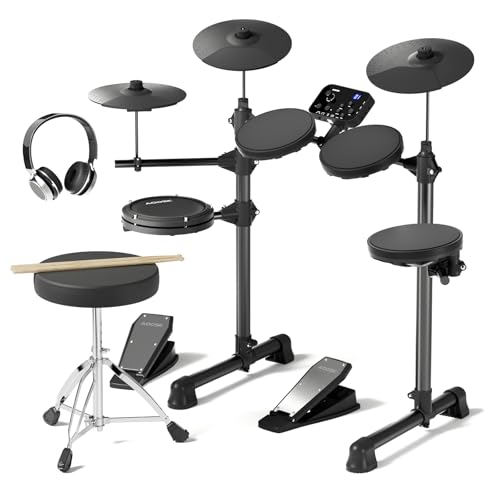 AODSK AODSK Electric Drum Set For Beginner 300 Sounds,4 Quiet Drum…
View on Amazon ↗
Listing names and images come from Amazon and are rechecked against the live listings; last checked Nov 8, 2026. No prices shown; the current price is on the listing.
Scope and limits. Use this guide as a checklist to hold against any listing you open. It is written from general knowledge of electronic drum kit design, without reviewing individual models, so verify dimensions, pad materials, and module outputs on the product page before buying.