Start with the case size you own and the shelf depth you have. Open single stands suit a small shelf and one showpiece, while tiered and wall mounted stands hold more without hiding the back row. The main tradeoff is footprint against capacity: a compact stand keeps one title visible, a wider tiered unit fits a collection but needs more depth.
Measure Your Cases Before You Measure the Stand
A display stand only works if the case sits flush and does not tip. Check the height, width, and thickness of the cases you plan to display. A standard single disc DVD case is typically about 7.5 inches tall, 5.3 inches wide, and 0.5 inches thick, but slim cases, multi disc sets, and special editions vary. Blu-ray cases are usually shorter, around 6.75 inches tall, with the same width and thickness. Box sets and steelbooks can be taller or wider, so treat the listing dimensions as a range, not a promise.
Compare those numbers to the stand's slot or ledge dimensions. A lip that is too short lets a case slide forward. A slot that is too narrow pinches the spine. For a row of mixed formats, look for an adjustable or universal ledge that accepts the tallest case you own. If you collect mostly Blu-ray titles, a stand built for DVD height will leave extra space above each case, which can look fine but may collect dust.
Shelf Depth Decides Whether a Tiered Stand Fits
Measure the shelf from front to back before you choose a tiered design. A two row tiered stand often needs at least 7 to 9 inches of depth to hold a back row of standard cases without the front row hanging over. A shallow shelf under 6 inches deep works better with a single open stand or a wall mounted rack. If the stand overhangs, the front case can get knocked off, and the back row sits at an angle that hides the cover art.
Open single stands are the safest choice for a narrow shelf or a windowsill. They take up about the footprint of one case, plus a small base. If you want to display a row of favorites on a deep shelf, a tiered unit makes the back row visible, but it also raises the center of gravity. Heavier box sets belong on the bottom tier or on a flat surface, not on the top of a tall stand.
Open, Tiered, or Wall Mounted: Pick Your Tradeoff
Three designs cover most buyers. An open single stand holds one case at a slight backward tilt. It is the cheapest and smallest option, but it only shows one title at a time. A tiered shelf holds three to six cases in stepped rows, so every spine or cover stays visible. It needs more depth and costs more than a single stand. A wall mounted rack frees the shelf entirely and can hold a row of cases, but it requires drilling and a flat wall surface.
Within those types, check the material and the base. Acrylic and clear plastic stands disappear visually, which puts the focus on the case art. Wood and metal stands read as furniture and can match a shelf or media cabinet. A weighted base helps a single stand stay put when you pull a case off. A felt or rubber pad on the bottom keeps the stand from scratching a wood shelf.
| Design | Capacity | Footprint | Viewing angle |
|---|---|---|---|
| Open single stand | 1 case | About one case width | Slight backward tilt |
| Tiered shelf | 3 to 6 cases | 7 to 9 inches deep | Stepped, all covers visible |
| Wall mounted rack | 3 to 10 cases | Zero shelf space | Flat or slight forward tilt |
Think about how often you rotate the display. If you swap the featured title weekly, an open stand is easy to grab and change. If you want a permanent row of a favorite series, a tiered shelf keeps everything in order. If the shelf is already full, a wall mounted rack adds display space without moving the collection.
The Mistake of Buying for the Shelf You Wish You Had
A common error is ordering a tiered stand that matches the width of the shelf but not the depth. The stand may look right from the front and hang over the back by two inches. Another mistake is assuming all cases are the same height. A row of Blu-ray cases in a stand sized for DVDs will have a gap above each case, which some people like and others find sloppy.
Also watch for stands described as 'universal' that do not list a maximum case thickness. A thick box set or a steelbook with a slipcover may not fit a slot designed for a slim plastic case. Check the listing for a lip height and a slot depth, and compare those to your thickest case. If the stand has no dimensions listed, treat it as a gamble.
Who Should Skip a Display Stand Altogether
If your collection lives in a closed cabinet or a drawer, a display stand adds nothing. The same goes for a room where sunlight hits the shelf directly, since a tilted case catches more light and fades the cover art faster than a spine on a shelf. If you need to store fifty titles in a small footprint, a disc binder for frequent reorganization or a standard shelf row is more practical.
Parents with young kids may also skip an open stand. A toddler can pull a case off a low shelf and the stand can tip. A wall mounted rack above reach solves that, but only if the wall and the mounting hardware can handle the weight. For a high traffic hallway, a closed media cabinet with doors protects the cases and hides the clutter.
If your main goal is to protect a signed or rare case, a display stand is only half the answer. You still need a UV protective sleeve or a spot away from direct light. The stand itself does not stop fading.
Small Parts That Change the Feel
The lip or ledge that holds the case is the part most likely to fail. A lip under half an inch may not hold a thick case at an angle. A lip with sharp edges can scratch the bottom of a slipcover. Look for a rounded or padded lip, or add a thin felt strip yourself.
The tilt angle matters more than it seems. A stand that leans a case back 10 to 15 degrees shows the cover art clearly from a seated position. A steeper tilt can cause glare from overhead lights. A completely flat stand lets the case sit upright, but then the stand is just a base, and the case may slide forward without a lip.
Some stands have a non slip base, a rubber pad, or small feet. Those details keep the stand from sliding when you dust the shelf. On a glass shelf, a rubber bottom is almost essential. On a wood shelf, felt pads protect the finish.
Long Term Costs Are Mostly Dust and Fading
A display stand has no moving parts, so the ongoing cost is time, not money. An open stand collects dust on the base and the bottom edge of the case. A tiered stand collects dust in the corners between rows. Wipe the stand with a dry microfiber cloth every couple of weeks, and use a soft brush for the corners.
Fading is the bigger long term issue. A case displayed face out in a sunny room will fade faster than a case on a shelf with only the spine exposed. If the stand sits near a window, rotate the displayed case often or use a UV blocking window film. For a signed cover or a rare slipcover, keep it in a drawer or a closed cabinet instead of on display.
Display Stand Questions That Come Up Before You Buy
How do I measure a display stand for my shelf?
Measure the shelf depth from front to back, then compare it to the stand's base depth. A single stand needs about the depth of one case. A tiered stand needs 7 to 9 inches for two rows of standard cases. If the shelf is shallow, choose a wall mounted rack or a single stand with a small base.
Can a display stand hold a Blu-ray case and a DVD case side by side?
Most open stands hold one case at a time, so mixing formats on the same stand is not an issue. For a tiered shelf, check the lip height and the slot width. A Blu-ray case is shorter but the same width as a DVD case, so it usually fits, but the back row may sit lower than the front row. A stand with adjustable or tall lips handles both.
Is a wall mounted display stand safe for a heavy box set?
Only if the rack is rated for the weight and you mount it into studs or proper drywall anchors. A box set can weigh several pounds, and a rack designed for thin plastic cases may sag or pull out. Check the weight limit and distribute heavy sets across the rack rather than stacking them on one side.
Does a display stand protect a case from fading?
No. A stand holds the case at an angle, which can expose more of the cover to light than a spine on a shelf. Fading comes from UV light, not from the stand. Use a UV blocking window film or keep the stand out of direct sunlight, and rotate the displayed case often if fading is a concern.
Which is better, an acrylic or a wooden display stand?
Acrylic is nearly invisible and puts the focus on the case art, but it scratches and shows dust. Wood looks like furniture and hides dust better, but it adds visual weight. Choose based on the room: acrylic for a clean modern shelf, wood for a warm media room or a matching cabinet.
Which Display Stand Should You Start With
For a collector who wants to feature one favorite title on a shallow shelf, a single open acrylic stand is the safe first pick. It fits almost any shelf depth, shows the cover art clearly, and costs the least. For someone with a deep shelf and a row of a favorite series, a tiered stand is the better call, because it shows every title in the row without hiding the back.
Real display stand listings, so you can check the points in this guide against actual products. These are affiliate links: as an Amazon Associate we earn from qualifying purchases, at no extra cost to you.
 GENERIC Now Showing Display Stand for Movie Cases - Tabletop Holder…
View on Amazon ↗
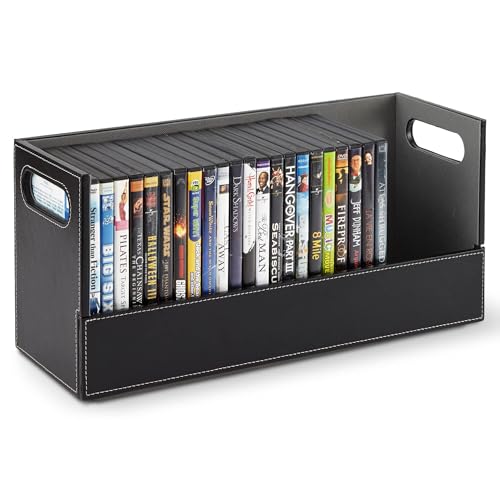 STOCK YOUR HOME Stock Your Home DVD Storage Box, Movie Shelf Organizer for…
View on Amazon ↗
 CHOWMOKWOK Blu-ray Display Frame for Standard Blu-ray Case and Disc, Wooden…
View on Amazon ↗
Listing names and images come from Amazon and are rechecked against the live listings; last checked Nov 8, 2026. No prices shown; the current price is on the listing.
What this guide is. This guide covers display stands as a product type, not any individual model. It is written from general knowledge of case sizes, shelf dimensions, and common stand designs, without reviewing specific products, owner feedback, or test results. Check the exact dimensions and weight limits on the listing before you order.