Your decision comes down to the probe junction, the calibration routine, and what happens after each reading. Single junction probes cost less and work for quick classroom demos. Refillable double junction probes last longer and handle samples that clog or contaminate. If you cannot commit to soaking, rinsing, and storing the probe properly, a meter with a replaceable electrode or a simpler test method will serve you better.
Single or double junction changes what you can test
A pH probe has a reference chamber that stays at a known voltage. That chamber connects to your sample through a tiny opening called a junction. A single junction exposes the reference directly to the sample. A double junction adds a second chamber between the reference and the sample.
For clean water, buffer solutions, and simple classroom titrations, a single junction probe works fine. The sample has little to clog the opening or poison the reference. For soil slurries, protein solutions, food samples, or anything with sulfides or heavy metals, a double junction protects the reference and keeps readings stable longer.
Check the listing for the word junction. If it only says 'glass electrode' with no junction type, it is usually a sealed single junction. That is not a defect, but it tells you the probe is meant for light use.
Calibration points set the floor for accuracy
Every digital pH meter needs calibration against known buffer solutions. The number of points tells you how much of the pH scale you can trust. A one point calibration sets the offset at a single pH, often 7.00. It is enough for checking trends in a classroom demo or a rough quality check.
A two point calibration adds a second buffer, usually pH 4.01 or 10.01, and sets the slope. That gives you a usable reading across acidic and basic ranges. A three point calibration uses pH 4.01, 7.00, and 10.01, and is the standard for lab work and quality control where a tenth of a pH unit matters.
More calibration points do not make a probe better if you never run the buffers. Each point takes time and buffer solution. Match the calibration style to the precision your work actually requires.
| Calibration style | Buffers used | Accuracy you can expect | Suits |
|---|---|---|---|
| One point | PH 7.00 only | Rough trend, offset only | Quick demos, spot checks |
| Two point | PH 7.00 plus 4.01 or 10.01 | Good across acidic or basic range | Classroom labs, hobby use |
| Three point | PH 4.01, 7.00, 10.01 | Best across full scale | QC, small research labs |
A meter that advertises automatic calibration still needs you to dip the probe in each buffer. Automatic means the meter recognizes the buffer value and locks it in, not that it calibrates itself without buffers.
The care routine decides the real cost
Every pH meter needs a wet probe. The glass sensing bulb and the junction must stay hydrated. A dry probe gives slow, drifting readings until it is rehydrated, and a probe left dry for weeks can fail permanently.
The minimum routine is to rinse the probe with distilled water after each use, blot it gently, and store it in a storage solution or a pH 4 buffer. Tap water is not a storage solution. Leaving the probe in distilled water pulls ions out of the reference chamber and shortens its life.
A sealed probe with a non replaceable electrode has no long term cost beyond storage solution and buffers. A refillable probe needs fill solution added through a small port, and a replaceable probe lets you swap the electrode when the response slows. If your meter has a replaceable electrode, check that the replacement part is easy to find before you buy the meter.
Temperature compensation is not a bonus feature
PH depends on temperature. The same solution reads a different pH at 10 °C than at 30 °C. Automatic temperature compensation, often called ATC, corrects the reading to the standard 25 °C reference. Most digital pH meters include ATC, but some budget pocket meters do not.
Without ATC, you must measure the sample temperature and correct the reading manually using a chart. That is slow and error prone in a busy lab. For any work where you compare readings across days or between samples at different temperatures, ATC is a requirement, not a luxury.
Check the listing for the temperature range of the ATC. A meter that compensates from 0 to 50 °C covers most aqueous lab work. A meter with a narrower range may drift if you test warm samples.
Pocket, pen, or bench changes the workflow
Digital pH meters come in three main forms. A pen style meter fits in a pocket and runs on button cells. It is the natural choice for field checks, school experiments, and quick quality control on a production line. The probe is built into the body, so the whole meter sits in the sample.
A handheld meter has a separate probe on a cable and a larger display. The probe can reach into a beaker or a test tube while the meter stays dry. This style works well in a teaching laboratory where many students share one meter and one probe.
A bench meter sits on a counter and runs from a power adapter. It usually has a larger display, a holder for the probe, and more calibration and data options. Bench meters fit small research labs and quality control stations where the meter stays in one place.
Your workspace decides this more than your budget. A bench meter in a field kit is a burden. A pen meter in a QC lab means you will replace it often.
Skip the meter if your sample is not watery
A pH meter measures the hydrogen ion activity in an aqueous solution. It needs a liquid sample or a liquid layer around the probe. For soil, you make a slurry with distilled water and measure that. For cheese, meat, or paper, you blend a sample with water first.
If you need to check pH on a surface without wetting it, a pH meter is the wrong tool. Litmus paper or a pH test strip gives a rough color match and works on a damp surface. A pH meter gives a number, but only when the probe is fully immersed in a liquid.
Also consider whether you need pH at all. Some quality checks call for conductivity, dissolved oxygen, or total dissolved solids. A multi parameter meter covers several of these, but a dedicated pH meter is simpler and cheaper if pH is the only reading you take.
How to read a listing without trusting the adjectives
Ignore words like professional, high accuracy, and laboratory grade. They are not tied to any standard. Look for the actual resolution, usually 0.1 pH or 0.01 pH. A 0.1 pH resolution is fine for most teaching and field work. A 0.01 pH resolution matters for research and QC.
Check the included items. A meter that arrives without buffers or storage solution is not ready to use. Some listings include a small kit with pH 4.00, 7.00, and 10.01 buffers, storage solution, and a carrying case. That kit saves you a separate order.
Ask the seller two questions if the listing is unclear. First, is the electrode replaceable, and what is the part number? Second, what is the junction type, single or double? If the seller cannot answer, the probe is almost certainly a sealed single junction with no replacement path.
Look for the IP rating if you will use the meter near sinks or in the field. An IP67 rating means the meter body survives brief immersion in water. The probe itself is always wet, so the rating applies to the electronics housing, not the sensing end.
Buffers are the consumable you will reorder
The meter is a one time purchase. Buffer solutions are not. You need fresh buffers for every calibration, and opened bottles have a shelf life. A bottle of pH 7.00 buffer left open for months absorbs carbon dioxide and drifts acidic.
Plan for small bottles if you calibrate weekly. A 250 mL bottle lasts a school term for a few meters but may expire before you finish it. Single use buffer pouches cost more per calibration but remove the shelf life problem.
Storage solution is another consumable. A small bottle lasts months because the probe only needs a few drops in the cap. Some meters ship with a storage cap that keeps the probe wet. If yours does not, a small beaker with storage solution and a loose cover works.
For a classroom with many meters, a shared buffer station with labeled bottles and a log of opening dates prevents most calibration errors. Write the date on each bottle when you open it.
Questions About Digital pH Meters
Is a digital pH meter worth it for a school science classroom?
Yes, if you use it more than a few times a term. A digital meter gives a numeric reading that students can record and graph, which supports quantitative experiments. For a one off acid base demo, pH paper is cheaper and faster. For a semester of titrations, a pen style meter with one point calibration is a practical middle ground.
Which digital pH meter is best for a small research lab?
Look for a bench or handheld meter with a double junction, refillable or replaceable probe, and three point calibration. The double junction protects the reference from proteins, soils, and reactive samples. Three point calibration gives you confidence across the full pH range. A replaceable probe means you do not throw away the meter when the electrode wears out.
How do I store a digital pH meter so it lasts?
Keep the probe wet at all times after first use. Rinse it with distilled water, blot it gently, and store it in storage solution or pH 4 buffer. Never store it in distilled water or tap water. If the probe dries out, soak it in storage solution for several hours and recalibrate. A dried out probe may recover, but repeated drying shortens its life.
Should I buy a meter with a replaceable electrode?
Yes, if you plan to use the meter for more than a year or test samples that clog probes. A replaceable electrode costs less than a new meter and lets you keep the same display and calibration routine. If you only take a few readings a month in clean water, a sealed pen meter is fine and cheaper.
What is the difference between single and double junction probes?
A single junction has one opening between the reference chamber and the sample. It works in clean, simple solutions but clogs or contaminates in soils, proteins, or samples with sulfides. A double junction adds a second chamber that shields the reference. It lasts longer in dirty samples and gives more stable readings, at a higher price.
Which Digital pH Meter Fits Your Bench
For a teaching laboratory or a small quality control bench, a pen style meter with a sealed single junction, one or two point calibration, and automatic temperature compensation covers most needs. If you test soil slurries, food samples, or protein solutions, or you need a reading you can defend to a tenth of a pH unit, step up to a handheld meter with a double junction probe, three point calibration, and a replaceable electrode. That probe costs more up front but survives the samples that kill a budget pen.
Real digital ph meter listings, so you can check the points in this guide against actual products. These are affiliate links: as an Amazon Associate we earn from qualifying purchases, at no extra cost to you.
 YINMIK YINMIK Digital pH Meter with Extra Replaceable Probe, Pocket pH…
View on Amazon ↗
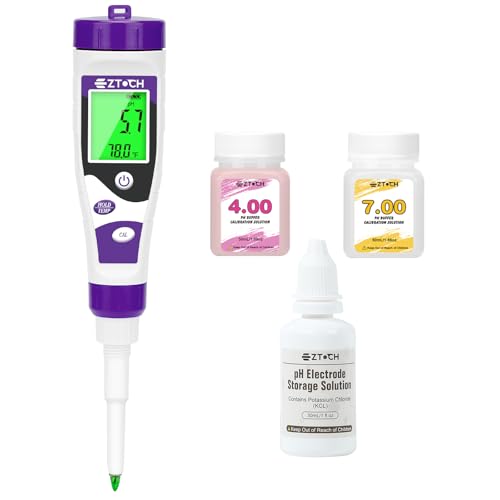 EZTOCH EZTOCH Food pH Meter, Digital pH Meter for Food Fermentation…
View on Amazon ↗
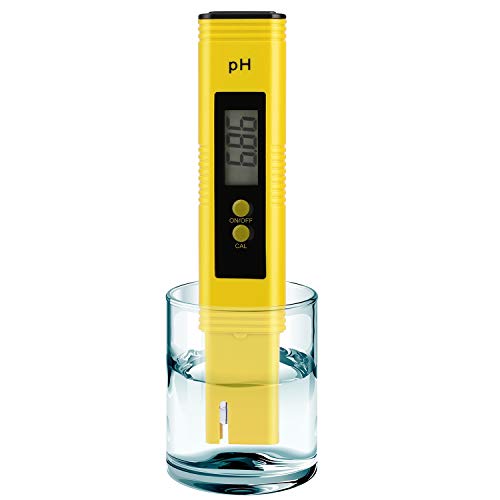 RUOLAN Digital pH Meter Tester Pen for Water, Pre-Calibrated, High Accuracy…
View on Amazon ↗
Listing names and images come from Amazon and are rechecked against the live listings; last checked Nov 8, 2026. No prices shown; the current price is on the listing.
How to read this guide. Use this guide as a checklist to hold against any product listing you are considering. It describes the category, not individual models, and no product documents, reviews, or tests were used in writing it. Verify any dimensions or included items on the listing before you buy.