Three factors decide a calligraphy set: nib type, ink flow, and how the pen fits your hand. Dip pens give the crispest lines but need constant dipping. Cartridge pens are cleaner and easier for beginners, yet feel less expressive. Brush pens sit between them for modern lettering. Match the set to your script style first, then check nib smoothness and ink consistency.
The nib is the real decision
Nib type sets the ceiling for what a set can do. A stiff, rounded nib suits monoline scripts like italic or basic Gothic. A flexible pointed nib is the only way to get the thin upstrokes and thick downstrokes of Copperplate or Spencerian.
Broad edge nibs, often cut straight across, create the thick and thin contrast of blackletter and uncial hands. Some sets include several nib widths for one script family. Others mix nib types, which sounds generous but often means you get one nib you love and four you ignore.
Nib material changes feel. Stainless steel nibs resist rust and need less care. Chrome plated nibs look shiny but can flake after weeks of ink exposure. Titanium or gold plated nibs add spring, yet the plating wears at the tip where you need smoothness most.
Ink flow separates smooth writing from scratchy stops
A nib that skips or digs into paper ruins practice faster than a cheap holder. Flow depends on the feed system, ink viscosity, and how clean the nib is when new. Many nibs arrive with a light oil coating from manufacturing that blocks ink. A quick wipe with rubbing alcohol usually fixes it.
Cartridge pens regulate flow through a plastic feed and an ink cartridge. They start reliably but limit you to the inks that fit that cartridge style, unless the set includes a converter. Converters let you use bottled ink in a cartridge pen and are worth checking for in the listing.
Dip pens have no feed at all. Ink clings to the underside of the nib or a small clip on reservoir. This gives beautiful line variation but demands a consistent dipping rhythm. Too little ink means a dry scratch mid stroke. Too much ink drops a blob on your page.
Pen balance and holder shape decide how long you can practice
Calligraphy practice is repetitive. A holder that is too thin, too heavy, or badly balanced makes your hand cramp within minutes. Look for a holder diameter around 9 to 11 millimeters, which suits most adult hands without a death grip.
Straight holders work for broad edge scripts and beginners. Oblique holders angle the nib to the left, which helps right handed writers keep the nib aligned for pointed pen scripts. Left handed writers often find straight holders more natural, though oblique holders made for lefties exist.
Check the grip section. Smooth metal or polished plastic gets slippery as your hand warms up. A matte finish, cork wrap, or slight taper gives your fingers a stable anchor without pressing hard.
Design types and where they fit
Four main types cover most calligraphy sets. The table below compares them by the script style they suit, how much cleanup they need, and how much line variation you can expect.
| Set type | Best for scripts | Cleanup effort | Line variation |
|---|---|---|---|
| Traditional dip pen | Copperplate, Spencerian, blackletter | High, clean nibs after each use | Highest, fully manual |
| Dip pen with reservoir | Long practice sessions, pointed pen | Medium, fewer dips but still ink care | High, with steadier flow |
| Cartridge pen | Italic, everyday practice | Low, replace cartridge and flush feed | Medium, limited by nib shape |
| Brush pen | Modern calligraphy, brush lettering | Low, cap tightly and store flat | Medium, pressure controls width |
Traditional dip pens reward patience with the sharpest hairlines. Cartridge pens trade some expressiveness for speed and portability. Brush pens are the easiest way to try modern lettering, but the felt tip wears down faster than a metal nib.
Paper is the silent partner in every stroke
A good nib on cheap copy paper still feels scratchy. Calligraphy ink is thin and wet, so it bleeds through absorbent paper. Look for paper labeled smooth, coated, or made for fountain pens. A paper weight around 90 to 120 grams per square meter usually holds ink without bleeding.
Tooth matters more than weight. Rough, textured paper catches the nib tip and splatters ink. Hot pressed watercolor paper and marker paper both work well. If you plan to practice daily, a smooth practice pad matters as much as the pens themselves.
You can pair a calligraphy set with the right paper from the start. The paper guide linked below explains what to check before you buy.
Mistakes that turn a first set into a drawer of regrets
The biggest mistake is buying a set with twelve nibs and one cheap holder. Nib variety is useless if the holder wobbles or the nibs are unbranded steel with rough tips. Two or three quality nibs in a solid holder beat a dozen mystery nibs.
Skipping the ink question is another common trap. Some sets include ink that is too thick for fine nibs or dries permanently inside a cartridge pen. Check whether the ink is dye based or pigment based. Pigment inks are waterproof but clog feeds faster. Dye inks flow better but fade in sunlight.
Buying a set for the wrong script wastes money. A brush pen set cannot produce Copperplate hairlines. A broad edge dip pen set cannot give you the bounce of modern brush lettering. Decide which script you want to learn first, then buy the set type that matches.
Care and long term costs
Dip pens need a rinse and dry after every session. Leftover ink corrodes nibs, especially iron gall inks. Blot the nib with a soft cloth and store it dry. A nib lasts months with care, but a neglected one rusts in weeks.
Cartridge pens need a flush every few weeks. Warm water through the feed clears dried ink and prevents hard starts. Cartridges cost more per milliliter than bottled ink, but a converter pays for itself quickly if you practice often.
Brush pens are disposable by nature. The felt tip frays after heavy use, and the ink inside cannot be refilled in most sets. Factor in replacement brush pens every few months if you practice daily.
How to read a calligraphy set listing
Check the nib material and width range first. A listing that says stainless steel and gives a tip width in millimeters tells you more than one that says premium nibs. Ask the seller which scripts the set is designed for if the description is vague.
Look for the ink type and whether a converter or reservoir is included. Photos should show the nib close up, not just the box. A blurry nib photo often hides a rough tip.
Ask about the holder material and grip diameter. If the seller cannot tell you the diameter, assume it is a generic plastic holder that may not fit your hand.
Who should skip a calligraphy set entirely
Anyone with hand pain or limited finger mobility may find a brush pen or a fountain pen with a stub nib more comfortable than a traditional dip pen. The constant dipping and light pressure control of pointed pen work can strain small joints.
Young children under about eight often lack the fine motor control for calligraphy nibs. A chisel tip marker or a brush pen with a larger grip is a better first step. Calligraphy sets are for deliberate practice, not casual coloring.
If you want neat everyday handwriting rather than decorative lettering, a calligraphy set is the wrong tool. A good fountain pen or even a gel pen with a smooth nib will serve that goal better and with less setup.
Calligraphy set questions before you buy
What is the difference between a dip pen and a cartridge pen for calligraphy?
A dip pen has no internal ink supply. You dip the nib into a bottle every few strokes, which gives the most control over line variation but requires constant attention. A cartridge pen holds ink inside, so it writes for pages without stopping. It is cleaner and easier, but the nib is usually stiffer and limits the thinnest hairlines.
How do I know if a calligraphy nib is good quality?
Check the nib under light for a smooth, even slit that reaches the tip without gaps. The tip should feel rounded to the touch, not sharp. Good nibs are made of stainless steel or properly plated metal and flex without feeling loose. A nib that catches on your fingernail when you draw it across will catch on paper too.
Can left handed people use calligraphy sets?
Yes. Left handed writers often prefer a straight holder because an oblique holder angles the nib for a right handed grip. Some left handed oblique holders exist, but they are rare. The ink also matters: fast drying inks prevent smudging as your hand moves across fresh letters. Brush pens and cartridge pens are easier for lefties than dip pens.
What paper should I use with a calligraphy set?
Smooth, coated paper labeled for fountain pens or markers works best. It resists bleeding and lets the nib glide. Rough or absorbent paper catches the nib and spreads the ink. A weight around 90 to 120 grams per square meter is a good starting point. Practice pads made for calligraphy cost more but save frustration.
Is a brush pen calligraphy set good for beginners?
Yes, if you want modern brush lettering rather than traditional scripts. Brush pens need no dipping and teach pressure control naturally. The downside is the felt tip wears out and cannot be replaced. For Copperplate or italic scripts, a nib based set is the better choice.
Which calligraphy set fits your practice table
A beginner who wants to learn Copperplate or Spencerian should start with a traditional dip pen set that includes two or three pointed nibs, a straight or oblique holder, and a bottle of dye based ink. That setup teaches pressure control and gives the crispest hairlines. If practice time is limited or you write on the go, choose a cartridge pen set with a converter and one smooth italic nib instead. It sacrifices some expressiveness for speed and clean hands.
Real calligraphy set listings, so you can check the points in this guide against actual products. These are affiliate links: as an Amazon Associate we earn from qualifying purchases, at no extra cost to you.
 STYQUENZER Styquenzer 10 Pcs Calligraphy Nibs Dip Pen, Dip Pen Nibs…
View on Amazon ↗
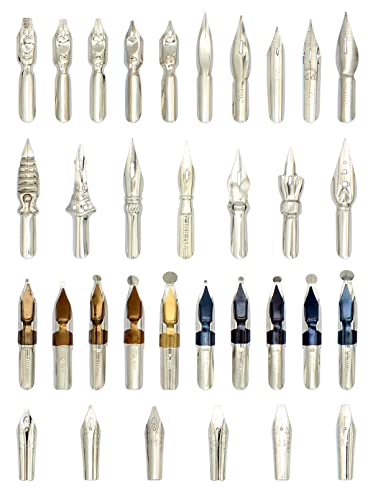 GULLOR Gullor A Bunch of Nibs for Comic Dip Pen, Assorted…
View on Amazon ↗
 PLOTUBE Plotube Calligraphy Pen Set, 11 Nibs, Black Ink, Pen Stand…
View on Amazon ↗
Listing names and images come from Amazon and are rechecked against the live listings; last checked Nov 8, 2026. No prices shown; the current price is on the listing.
How to read this guide. This guide is written from general knowledge of how calligraphy tools work, not from testing any individual set. It cannot tell you whether a specific listing has a smooth nib or well sealed ink, so check the seller photos and ask about nib width and ink type before you buy.