Display style, authentication, and ball condition decide most purchases. A framed ball suits fans who want a finished wall piece, while a raw ball in a cube gives flexible handling and lower cost. The main tradeoff is signature visibility against long term protection. Buyers who prioritize proof of authenticity should check for a tamper evident hologram and a matching certificate number.
Match the Display to Where It Will Live
Think about the room before the ball. A framed case hangs flat on a wall and suits an office, den, or hallway where shelf space is limited. The frame adds weight and a fixed viewing angle, so the signature must be positioned to face outward when mounted.
A display cube sits on a desk or shelf and can be rotated to show the signature from different sides. Most cubes use a clear acrylic box with a small stand or recessed base. Check that the ball does not roll inside, because a shifting ball can rub the ink against the acrylic over time.
A raw ball, kept in a drawer or on a simple stand, gives the closest view but offers no dust or UV protection. This option works for collectors who plan to handle the ball or photograph it often. If you choose raw, store it away from direct sunlight and keep the surface clean with a dry microfiber cloth.
Authentication Is the Paper Trail, Not the Sticker
A certificate of authenticity only matters if it is traceable. Look for a unique serial number on the certificate that matches a numbered hologram or tamper evident sticker on the ball or its case. A generic certificate without a matching number adds little value.
Ask the seller who issued the authentication. Reputable third party authenticators publish a searchable database where you can enter the serial number and see the item details. If the seller cannot name the authenticator or the database does not match the ball description, walk away.
For modern signed balls, a photo of the athlete signing your specific ball is rare but valuable. More common is a witness record or a company guarantee that the signature was obtained at a private signing. Compare the signature placement and pen color in the listing photos to the certificate description.
- Check for a numbered hologram that matches the certificate.
- Look up the serial number in the authenticator's online database.
- Ask which company witnessed or held the signing.
- Compare the ball type and pen color to the certificate details.
Ball Type Changes How a Signature Ages
An official league ball holds value better than a replica or promotional ball. Official balls use the same weight, size, and panel materials as game balls, which gives the signature a stable surface. Replica balls often have a slicker synthetic cover that can cause ink to bead or fade unevenly.
Leather balls absorb ink differently than synthetic ones. A leather surface lets the ink settle into the grain, while a slick synthetic cover may show smudges or thin strokes. Check close up photos for ink pooling, skipping, or bleeding between panels.
Baseballs, basketballs, footballs, and soccer balls each present different signing surfaces. A baseball's curved white panels force short, tight signatures. A basketball's pebbled surface can make a marker skip. Match your expectations to the ball's sport and surface texture.
How to Read a Listing Before You Pay
Start with the photos. A clear close up of the signature is essential, along with a shot of the hologram and certificate number. If the listing only shows a distant ball or stock images, ask for more photos before buying.
Read the item condition field carefully. Terms like 'signed in person' mean the athlete physically handled the ball. 'Facsimile signature' means a printed reproduction, not a real autograph. 'Pre printed' or 'stamped' are also not hand signed. Avoid listings that bury these words in the description.
Compare the ball brand and model to what the certificate states. A certificate for a Wilson official NFL ball should not accompany a generic replica. Mismatched details are a red flag, even if the signature looks real.
Where Balls Fade and How to Slow It
Sunlight is the fastest way to fade a signature. Ultraviolet light breaks down the ink and can yellow the ball's cover. Keep any autographed ball away from windows, skylights, and bright spotlights. A display frame with UV filtering glass or acrylic reduces this risk.
Humidity and temperature swings cause the ball material to expand and contract, which can crack the ink. Avoid attics, basements, garages, and rooms above radiators. A stable indoor room with moderate humidity works best.
Never clean an autographed ball with liquids, soaps, or leather conditioners. These can smear the ink or strip the finish. A dry microfiber cloth and a gentle touch are enough for dust. For a framed ball, clean only the outside of the glass or acrylic.
Display Options Compared
| Display Style | Signature Visibility | Dust and UV Protection | Best For |
|---|---|---|---|
| Raw Ball | Complete, from all angles | None, the ball is exposed | Handling, photography, budget buyers |
| Display Cube | High, through clear acrylic | Dust protection, limited UV | Desk or shelf display, rotating view |
| Framed Case | Good, behind glass or acrylic | High, with UV filtering option | Wall display, long term protection |
| Wall Mounted Holder | Very high, open front | None, but keeps ball off surfaces | Minimalist look, easy access |
Choose the display style before settling on a specific ball, because the case dimensions must match the ball's diameter. A baseball needs a different cube size than a basketball or soccer ball.
Who Should Skip an Autographed Ball
If you want to use the ball for play, do not buy an autographed one. Throwing, bouncing, or kicking a signed ball will smudge the ink and scuff the surface. Buy a clean unsigned ball for play and keep the signed one on display.
Buyers who need guaranteed future resale value should consider a graded and encapsulated autograph from a major authenticator. An autographed ball is harder to grade than a flat card or photo because the ball's shape and surface vary. If resale is the main goal, a certified card or photo may be easier to sell.
If you are buying a gift for a casual fan, an unsigned official ball or a lower cost replica with a facsimile signature may be a better fit. A real autographed ball carries a higher price and needs careful handling, which not every recipient wants.
The Hidden Costs of Keeping a Signature
A raw ball may need a display case, a stand, or a UV filtering sleeve purchased separately. Factor that cost into the total. A framed case usually includes the frame and mounting hardware, but check whether the frame uses glass or acrylic and whether it is UV rated.
Over the long term, a leather ball may need occasional conditioning to prevent cracking, but conditioning products should never touch the signature. Apply any conditioner only to unsigned areas, or skip it entirely and keep the ball in a stable environment.
If you ever want to re authenticate or sell the ball, the original certificate and hologram must stay intact. Do not remove the sticker, and keep the certificate in a safe place. A missing hologram can cut resale value significantly.
Autographed Ball Questions Buyers Actually Ask
How can I tell if an autographed ball is real?
Check that the ball carries a tamper evident hologram with a serial number, and that the number matches the paper certificate. Look up the serial number in the authenticator's online database. If the database entry matches the ball type and signing description, the signature is more likely genuine. A generic certificate without a searchable number adds little assurance.
What is the best way to display an autographed baseball?
A clear display cube works well for a baseball because it lets you rotate the ball to see the signature from the sweet spot. Choose a cube with a recessed base that keeps the ball from rolling. If wall space is limited, a small acrylic shelf with a ball ring also works. Avoid direct sunlight in either case.
Can an autographed football fade in a display case?
Yes, especially if the case uses regular glass or acrylic without UV filtering. Sunlight and bright indoor lights can fade the signature over months or years. Look for a case labeled UV protective or UV filtering. Even with that protection, keep the case out of direct window light.
Does a certificate of authenticity add value to a signed ball?
A certificate from a recognized third party authenticator adds value and makes resale easier. The certificate must include a serial number that matches a hologram on the ball. A certificate without a matching number, or from an unknown company, adds little. Keep the certificate and hologram together.
Which is better, a framed autographed ball or a display cube?
A frame protects the ball from dust and offers UV filtering, but the glass or acrylic can create glare and slightly reduce signature clarity. A cube gives a clearer, closer view and allows rotation, but offers less UV protection. Choose a frame for long term wall display, a cube for a desk or shelf.
Which Autographed Ball Fits Your Shelf or Wall
A fan who wants a finished piece for an office wall should start with a framed autographed ball in a UV filtering case with a searchable certificate number. For someone who likes to pick up the ball and turn it under a light, a raw ball in a clear display cube gives a more direct view. Skip the raw option only if the room gets direct sun, because no cube fully stops UV fading.
Real autographed ball listings, so you can check the points in this guide against actual products. These are affiliate links: as an Amazon Associate we earn from qualifying purchases, at no extra cost to you.
 CARDARCHIVER 8 Pack Baseball Display Cases - UV Protected Acrylic Square…
View on Amazon ↗
 HAPPYSEASON Happyseason Baseball Display Case, 93.8% UV Protection Clear Acrylic Box…
View on Amazon ↗
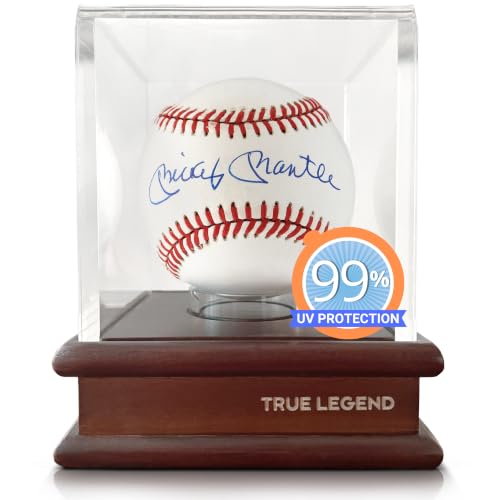 TRUE LEGEND True Legend Baseball Display Case, 99% UV Protection, Signed Ball…
View on Amazon ↗
Listing names and images come from Amazon and are rechecked against the live listings; last checked Nov 8, 2026. No prices shown; the current price is on the listing.
What this guide is. This guide covers autographed balls as a product category, from display cases to authentication checks and ball types. It does not evaluate individual signed balls or specific athletes, and it is written from general knowledge of sports memorabilia rather than any product documents or tests. Check the ball diameter, case dimensions, and certificate details on the listing before buying.