Joint stiffness and plastic quality decide whether a figure holds a pose or flops over. Display collectors should favor rigid joints and a stable stand; photographers and kids need softer joints that move without snapping. The main tradeoff is poseability against long term stability.
Joint Stiffness Is the First Thing to Check
A figure that cannot hold its advertised pose is just a statue with extra steps. Before anything else, check how the joints feel when you move them. A good joint should resist slightly, then stay exactly where you leave it.
Loose joints are common on budget figures and figures with thin limbs. The plastic around the joint stretches over time, and the limb starts to droop. Tight joints, by contrast, can snap if you force them. Look for a figure with ratcheted joints or joints that click into place, which hold weight better.
If you can, compare the joint design on the listing. Ball joints give more range but wear out faster than hinge joints. Swivel joints are the weakest. A figure with a mix of ball and hinge joints, especially at the hips and shoulders, tends to hold a pose longer.
Plastic Type Decides How Long the Figure Lasts
Most action figures use PVC, ABS, or a blend. PVC is softer and more flexible, which makes it forgiving when you bend a limb but prone to warping in heat or under its own weight. ABS is harder and holds detail better, but it can crack if dropped.
A figure made mostly of PVC will start to lean after a few months on a warm shelf. A figure with ABS in the load bearing parts, like the legs and torso, will stand straighter for longer. Check the listing for the material breakdown, or ask the seller if it is not listed.
Cheap plastic also gets sticky over time, a process called plasticizer migration. It happens when the softening agents in PVC break down. A figure that feels greasy or leaves a residue on your fingers is already degrading. Harder plastic, or a figure with a matte clear coat, resists this.
The Stand Is Not an Accessory, It Is Insurance
Many figures come with a clear plastic stand, and many buyers throw it away. That stand is often the only thing preventing a shelf dive. A figure with small feet or a heavy cape will fall over without one.
A good stand grips the figure at the waist or has a peg that fits a hole in the figure's foot. A bad stand is a flat disc with no grip, which only works for figures with wide, flat feet. If the figure does not include a stand, plan to buy one separately or display it leaning against something.
For dynamic poses, like a running or jumping character, a stand is mandatory. Even a stiff figure cannot hold a one legged pose forever. The stand takes the weight off the ankle joint, which is usually the first to loosen.
Display Case or Open Shelf Changes What You Need
Where you put the figure changes which features matter. In a closed glass shelf setup, dust is less of a problem, but heat can build up and warp PVC. An open shelf gets dusty, but the airflow keeps plastic stable.
If you display in direct sunlight, avoid soft PVC entirely. UV light breaks down the plastic and fades paint. A hard ABS figure with a UV resistant clear coat will hold up better. Or just move the shelf away from the window.
For a shelf in a high traffic room, a figure with a wide stance and low center of gravity is safer. Tall, thin figures with small feet will tip over every time someone walks by. A heavier base or a stand solves this.
Poseability Versus Stability Is the Core Tradeoff
A figure with thirty points of articulation can be posed in a hundred ways, but each joint is a point of failure. A figure with five points of articulation is more stable but can only stand in one or two poses. Knowing how you will use the figure decides which side you want.
For photography or stop motion, poseability wins. You need the figure to hit extreme angles and hold them for a few minutes at a time. Loose joints are less of a problem because you can support the figure with wire or a stand.
For a display that you set and forget, stability wins. Choose a figure with fewer, stiffer joints, or a statue style figure with no joints at all. It will look the same in five years as it does on day one.
The table below compares the main design types by how they handle this tradeoff.
| Design type | Joint feel | Pose range | Shelf stability | Suits |
|---|---|---|---|---|
| Statue style | No moving joints | One pose only | Excellent | Display only |
| Standard articulated | Moderately stiff | Several poses | Good with a stand | Most collectors |
| High end import | Tight, many joints | Very wide | Needs a stand | Photographers |
| Budget bendy | Very loose | Wide but floppy | Poor | Kids or customizers |
High end import figures look impressive, but their many joints mean more parts to loosen. Budget bendy figures are fun to fiddle with, but they will not stand on their own for long.
Read the Listing Like a Collector, Not a Fan
The product photos show the figure in its best poses, often supported by stands or wire that are not included. Check the listing text for the actual joint count and material. A photo of a figure doing a handstand does not mean it can do that out of the box.
Ask the seller three questions before you buy. What plastic is the figure made of? What joints does it have, and are they ratcheted? Does it include a stand, and what type? If the seller cannot answer, the figure is probably low quality.
Also check the figure's height and weight. A 6 inch figure that weighs almost nothing is likely hollow or made of cheap plastic. A heavier figure with a solid torso will balance better. The listing should state the height in inches or centimeters.
Who Should Skip an Action Figure Entirely
If you want a piece that never moves, never leans, and never needs adjusting, buy a statue or a prop replica for a shelf. An action figure is inherently a compromise between poseability and stability. A statue gives up poseability for perfect stability.
If the figure is for a young child, check the small parts. Many action figures have removable hands, weapons, or accessories that are choking hazards. A figure designed for play should have larger, integrated parts and softer plastic.
If you are buying a figure as an investment, know that opened figures lose most of their value. A figure kept in its box will hold value better, but then you cannot display it. Decide which matters more before you cut the tape.
Long Term Care Is Mostly About Gravity
Gravity never stops pulling on a posed figure. Over time, any joint will loosen if it is holding weight. The best way to extend a figure's life is to change its pose every few months, or to use a stand that takes the weight off the joints.
Dust is the second enemy. Dust mixes with skin oils from handling and forms a grime that is hard to remove. A soft brush or a can of compressed air works for most figures. Avoid water or cleaning sprays, which can strip paint or seep into joints.
If a joint does become loose, it is often fixable. A drop of clear nail polish or floor polish on the joint, worked back and forth, can add friction. But this is a temporary fix. The real solution is to buy a figure with better joints in the first place.
Action Figure Questions That Come Up After the Unboxing
How do I fix a loose joint on an action figure?
Apply a small drop of water based clear polish to the joint, then move the joint back and forth for a minute to spread it. Let it dry completely before posing. This adds friction, but it is temporary. For a permanent fix, you may need to replace the joint, which is usually not worth it on a budget figure.
What is the best plastic for an action figure?
ABS plastic is best for the load bearing parts like the torso and legs because it is hard and resistant to warping. PVC is fine for the head, hands, and accessories because it holds fine detail and is slightly flexible. A blend of both is common and works well if the ABS is in the right places.
Can I display an action figure in direct sunlight?
No. UV light fades paint and breaks down PVC, causing it to become brittle or sticky. If the shelf must be near a window, use a UV filtering film on the glass or choose a figure made mostly of ABS with a clear coat. Even then, rotate the figure's position occasionally.
Do all action figures need a stand?
Not all, but most benefit from one. A figure with wide, flat feet and a low center of gravity can stand on its own. A figure with small feet, a heavy cape, or a dynamic pose needs a stand. A waist gripping stand is more secure than a foot peg stand.
Is a higher price always better for an action figure?
Not always. A higher price often means more detail, more joints, and better paint, but it does not guarantee stability. Some expensive import figures have very loose joints because they prioritize poseability. Check the joint type and material, not just the price.
Which Action Figure Should You Actually Buy
A collector who wants a figure on a shelf in a living room, seen every day, should pick a standard articulated figure with ratcheted joints, ABS in the legs, and a waist gripping stand. It holds a pose for years and survives the occasional bump. For someone photographing figures in dynamic action shots, a high end import with many tight joints is the better pick, even though it needs a stand and more careful handling.
Real action figure listings, so you can check the points in this guide against actual products. These are affiliate links: as an Amazon Associate we earn from qualifying purchases, at no extra cost to you.
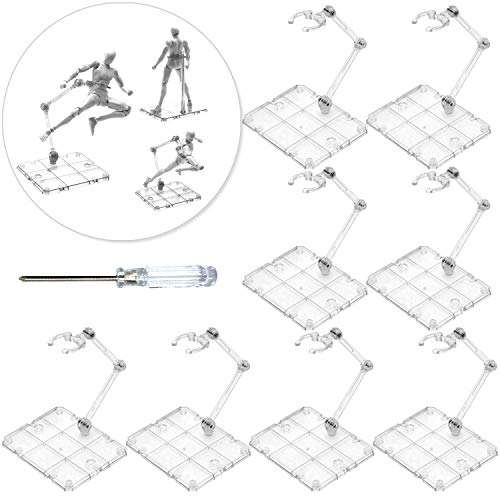 XISTEST XISTEST Action Figure Stand, 8 PCS Assembly Action Figure Display…
View on Amazon ↗
 DDUNG SEOL Ddung Doll Stand - Dolls And Action Figure Stand(3-Pack) |…
View on Amazon ↗
 ZOVELYNTA Zovelynta 8-Pack Clear Adjustable Action Figure Stand with Metal Clips…
View on Amazon ↗
Listing names and images come from Amazon and are rechecked against the live listings; last checked Nov 8, 2026. No prices shown; the current price is on the listing.
Scope and limits. This guide explains how to choose an action figure based on its design, materials, and joints. It does not cover specific models or brands, and no individual product documents or tests were used. Check the listing for the exact height, material, and included accessories before ordering.